


A French crop low fade is a short men’s haircut with a textured top, a short blunt fringe, and sides that fade down from just above the ears to the neckline. It keeps the clean shape of a classic crop and adds a soft, low blend that looks sharp without feeling harsh.
The cut works on straight, wavy, and curly hair, suits an office or a weekend, and needs only a few minutes of styling. A low taper version leaves a little more length on the sides for a gentler finish. This guide covers 30 styles, how to brief your barber, styling steps, common mistakes, and who should try it.
What Is a French Crop Low Fade?

The French crop is a short cut with a cropped, textured top and a fringe that sits straight across the forehead. It is often described as a cousin of the Caesar cut, named after Julius Caesar, the Roman leader known for his short, forward-combed hair.
A low fade starts just above the ear and follows the hairline down to the nape. Paired with the crop, it creates short back and sides with a smooth gradient and a top that holds its shape.
Here is the quick version most barbers work with:
• Top length: about 1 to 3 inches, cut with texture
• Fringe: short, blunt, and sitting above or at the eyebrows
• Sides and back: faded or tapered low, near the ears and neckline
• Upkeep: a fresh cut every 3 to 4 weeks keeps the fade clean
• Best for: straight, wavy, thick, and curly hair
French Crop Low Fade vs French Crop Low Taper
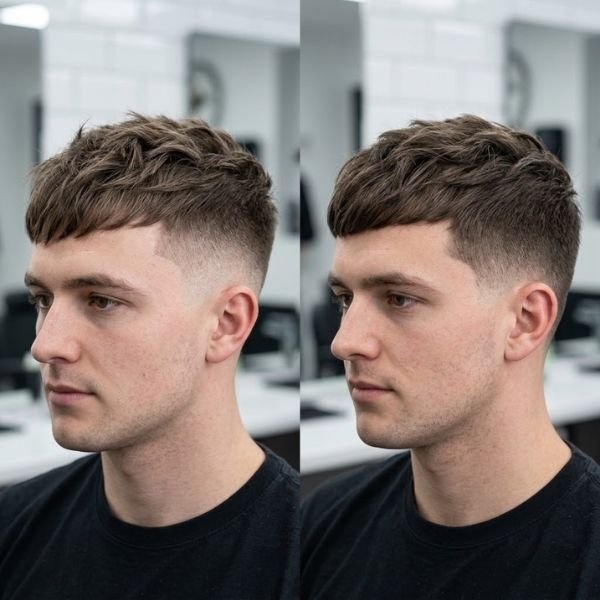
| Feature | French Crop Low Fade | French Crop Low Taper |
| Length at the neckline | Very short, often to the skin | Short but visible hair remains |
| Contrast | High, a clear gradient | Soft, a subtle shortening |
| Where it starts | Just above the ear | Sideburns and neckline |
| Grow out | Looks untidy in 2 to 3 weeks | Stays neat for 4 to 5 weeks |
| Best for | Sharp, bold looks | Natural, office friendly looks |
Why Is the French Crop Low Fade So Popular?
Barbers keep recommending it because it solves common hair problems with very little effort. The Fashionisto notes that the French crop gains a modern upgrade when paired with a low taper fade, balancing classic and current style.
• Low maintenance: the short top dries fast and needs only a little product
• Versatile: it suits office, gym, and evening settings
• Flatters many faces: the fringe softens a long forehead and the fade sharpens the jaw
• Works with most textures: straight, wavy, thick, and curly hair all hold the shape
• Celebrity approved: actor Tom Holland, known for playing Spider-Man in Marvel films, has worn a French crop, which helped the cut reach a wider audience
It also grows out well. Because the shape is short and structured, it never looks neglected for long.
30 Best French Crop Low Fade & Low Taper Styles for Men
Use the list below as a menu. Each style includes who it suits and what to tell your barber.
1. Classic French Crop Low Taper

Short textured top, straight fringe, and a light taper at the ears and neck. It is the safest pick for first-timers and conservative workplaces.
Ask for a #1 or #2 guard at the base, blended up into the top.
2. French Crop Low Taper Fade

This version adds more contrast. The sides fade to a very short length at the edge of the ear and neckline while the upper sides keep some length.
It suits men who want a visible fade gradient without losing the soft sides of a taper.
3. Textured French Crop Low Taper Fade

Barbers add choppy layers with point cutting or razor texturizing. The result is movement and separation on top.
A matte clay finishes the look. It works well on fine to medium hair that tends to look flat.
4. Messy French Crop Low Taper Fade

Rough-dry the top and push the fringe forward without a perfect line. The sharp fade keeps the messy top looking intentional.
It also hides cowlicks and uneven growth patterns.
5. Short French Crop Low Taper

Keep the top near 1 inch for the fastest routine. This is a wash and go option for hot weather, gym days, and busy mornings.
6. French Crop Low Taper Wavy Hair

Leave 2 to 3 inches on top so natural waves sit forward into the fringe. The low taper stops the sides from puffing out.
A few sprays of sea salt spray adds grip and definition.
7. French Crop Low Taper Straight Hair
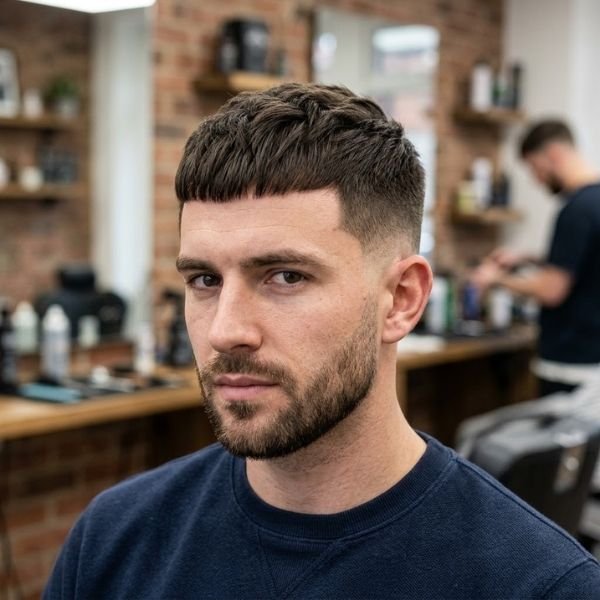
Straight hair holds a blunt fringe better than any other texture. The risk is a flat finish, so ask for light layering on top.
Blow dry forward with a comb, then finish with a light pomade.
8. French Crop Low Taper for Curly Hair

Keep about 3 inches of curls on top and taper the sides tight. The curls fall into a natural fringe, so no heavy styling is needed.
Apply curl cream to damp hair and avoid brushing it dry, which causes frizz.
9. French Crop Low Taper Thick Hair

Thick hair can puff up and lose the crop shape. Ask your barber to remove weight with texturizing shears.
Use a strong-hold clay to keep the top controlled through the day.
10. French Crop Top Low Taper

This style leaves a slightly longer, lifted crown with the fringe still short. Blow dry the top up and forward for height.
The extra volume helps balance a narrow forehead or longer face.
11. French Crop Low Taper Textured Fringe

The fringe is cut into soft points and falls low across the forehead. A longer fringe can cover half the forehead, as noted in the Luxe Digital guide.
It suits square and oval faces and gives a youthful, relaxed feel.
12. Low Taper Mullet French Crop
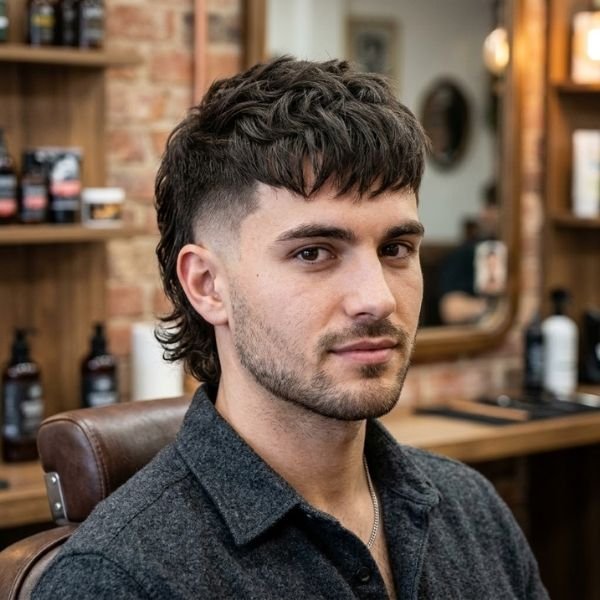
This hybrid keeps a cropped front and adds length at the back. A mullet is a cut that is short in front and longer behind.
The low taper keeps the sides clean so the look reads modern, not messy. Trim the nape often.
13. Modern French Crop Low Taper

The modern version keeps the fringe full and slightly rounded, and the fade follows the natural curve of the head. The Fashionisto describes this softer approach as a clean finish around the ears.
14. Long French Crop Low Taper

Grow the top to 3 or 4 inches and let the fringe graze the eyebrows. This needs more product and more frequent shaping.
It looks best on thick or wavy hair.
15. French Crop Low Taper with Beard

Blend the fade into the sideburns and the beard so there is no sudden line. A short, tidy beard balances the cropped top.
Trim the beard neckline in step with your haircut schedule.
16. French Crop Low Taper for Round Face

Height on top makes a round face look longer. Ask for more length at the crown and a textured, slightly angled fringe.
Keep the sides short and clean so the cheeks do not look wider.
17. French Crop Low Taper with Skin Fade
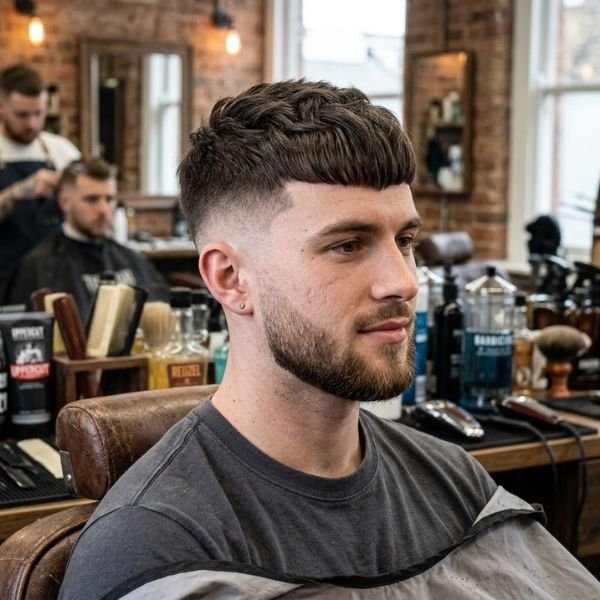
A skin fade takes the bottom of the sides down to bare skin. It gives the strongest contrast of the low options.
Expect a touch up every 2 to 3 weeks to keep it crisp.
18. French Crop Low Taper with Line Up
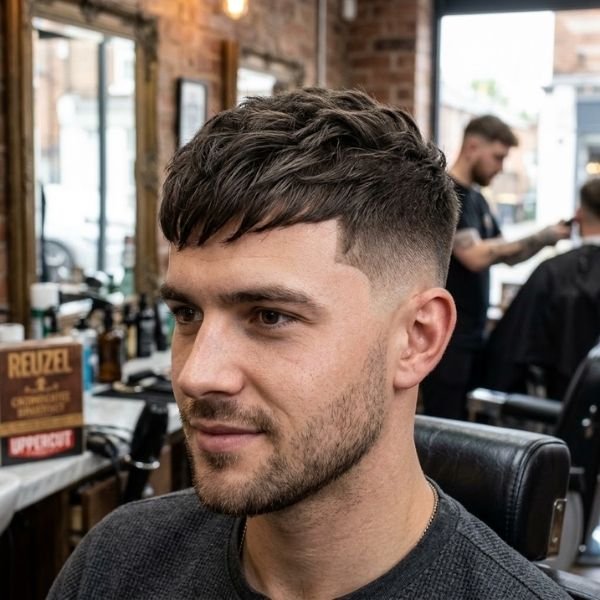
A line up cleans the front hairline and temples with a razor edge. It makes the fringe look sharper and the whole cut look finished.
It grows out fast, so book a quick edge between full cuts.
19. French Crop Low Taper for Receding Hairline

The forward fringe covers the temples and makes the top look fuller. Keep the sides short so the contrast supports the top.
Ask for a slightly longer fringe with texture for a natural cover.
20. French Crop Low Taper with Design

A thin shaved line or a small pattern in the taper adds personality. Choose a barber who has done designs before.
Keep it small at first. Simple lines near the temple age better than complex shapes.
French Crop Fade Variations Worth Trying
These ten options change the fade height, color, or hair type. They are useful if the classic low version is not the right fit.
21. French Crop Mid Fade

A mid fade starts around the temple. It gives more contrast than a low fade and suits men with strong jawlines.
22. French Crop High Fade

The fade begins near the temple or higher for maximum contrast. Barber educators at JATAI note that high fades are usually cut skin first, while low fades are cut from long to short.
23. French Crop Low Taper Blonde Hair

A bleached or blonde top with natural darker sides creates strong contrast. Use purple shampoo to control brassiness.
Bleach dries hair, so condition weekly.
24. French Crop Low Fade with Burst Fade

A burst fade curves in a half circle around the ear and leaves length at the nape. It pairs well with a longer back or a mullet shape.
25. French Crop Low Fade with Drop Fade

A drop fade curves down behind the ear instead of running straight across. It follows the shape of the skull and adds a stylish angle.
26. French Crop Low Fade for Fine Hair
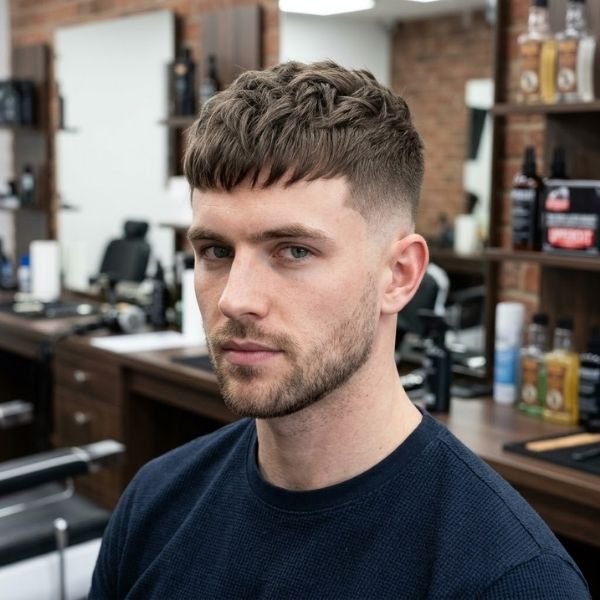
Keep the top at 1.5 to 2 inches and use texture powder for lift. Avoid heavy creams that weigh fine hair down.
27. French Crop Low Fade for Thin Hair

Short sides make thin hair on top look denser. A blunt, textured fringe adds the look of thickness.
Use a light matte product and skip heavy oils.
28. French Crop Low Fade for Black Men

The cut works well with tight coils on top. Keep the top about 1 to 2 inches, brush the hair forward, and add a sharp line up.
Moisturize often so the coils stay healthy and defined.
29. French Crop Low Fade for Asian Hair
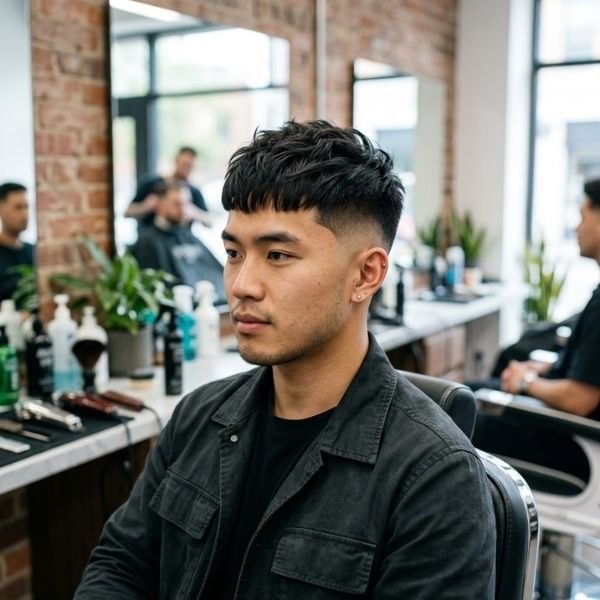
Asian hair is often thick and straight, so the sides can stand up. A low taper keeps them flat and tidy.
Ask for texturizing on top so the crop does not turn into a helmet shape.
30. French Crop Low Fade with Hard Part

A razor-cut hard part adds a clean line on one side. Sweep the fringe slightly to the side for a sharper, more formal look.
How to Ask Your Barber
Clear communication prevents most bad haircuts. A good brief covers three things: the top, the sides, and a picture.
Discuss Fringe or Top Texture
Say how you want the top to look. Words like blunt, choppy, or soft help your barber choose between scissors, razor, or thinning shears.
Mention your cowlicks and hairline so they can plan the fringe.
Show a Photo of Your Desired Style
A photo removes guesswork. Bring one image of the front and one of the side, ideally on a similar hair type to yours.
Specify the Length of the Top and Fade
Be specific with numbers. For example:
• “I want a French crop with a low taper fade.”
• “Take the bottom to a #1 and blend up to a #3 above the ear.”
• “Leave about 2 inches on top with a textured, straight fringe.”
Numbers keep the result consistent from one visit to the next.
Styling Tips
The cut is easy to style, but small steps make a big difference.
Use the Right Styling Products
Pick a product by finish. Matte clay gives texture, pomade adds shine and control, and sea salt spray adds grip. Start with a pea-sized amount and add more only if needed.
Style Straight Hair Properly
Blow dry the top forward while it is damp. Use a comb to set the fringe, then switch to cool air to lock the shape.
Work With Your Natural Curls
Apply a leave-in conditioner or curl cream. Let curls air dry or use a diffuser so they form a natural fringe.
Keep Up with Regular Trims
A fade softens within 2 to 3 weeks. Book a trim every 3 to 4 weeks, and every 4 to 5 weeks if you choose a taper.
Create a Relaxed Messy Look
Rub a little clay between your palms and work it through the top with your fingers. Push the fringe forward and leave it uneven.
French Crop Low Taper: Frequently Asked Questions
What is a French crop low fade?
It is a short haircut with a textured top, a short straight fringe, and sides faded low around the ears and neckline.
What is the difference between a low fade and a low taper?
A low fade shortens the hair closely, often to the skin. A low taper only trims the sideburns and neckline and keeps more length.
How long should hair be for a French crop?
Most barbers leave 1 to 3 inches on top. Curly hair needs a little more length to show its shape.
How often should I get a trim?
Every 3 to 4 weeks for a fade and every 4 to 5 weeks for a taper.
Does a French crop work on curly hair?
Yes. A low taper keeps the sides neat while the curls form a natural fringe on top.
Does it suit a receding hairline?
Yes. The forward fringe covers the temples and the short sides make the top look fuller.
Which product is best for a French crop?
Matte clay is the most popular choice because it adds texture without shine.
Common Mistakes to Avoid With a French Crop Low Taper
Most problems come from small details. Watch out for these:
• Cutting the fringe too short: it looks harsh and leaves no room to style
• Skipping texture: a flat, blunt top can look like a bowl cut
• Picking the wrong fade height: a high fade on a low taper request changes the whole look
• Using too much product: heavy product weighs the top down and looks greasy
• Ignoring your hairline and cowlicks: they decide how the fringe falls
• Waiting too long between trims: the fade loses its shape quickly
• Not showing a photo: names like fade and taper mean different things to different barbers
Fix these and the cut will look better every time.
Who Should Try the French Crop Low Fade?
This cut suits most men, but it fits these groups best:
• Men with straight, wavy, or thick hair: the top holds the shape well
• Men with oval, square, or round faces: the fringe and fade balance proportions
• Busy professionals: the routine takes under five minutes
• Men with a receding hairline: the forward fringe gives natural cover
• First-time crop wearers: the low taper is the gentlest way to try it
If you have a very thin crown or a very tight curl pattern, ask for a version made for your hair, such as the fine hair or Black men styles above.
Conclusion
The French crop low fade is a smart choice because it is clean, flexible, and easy to maintain. Whether you pick a soft taper or a sharper skin fade, the key is a textured top, a well cut fringe, and a barber who understands your hair.
Pick two or three styles from the list, save the photos, and use the barber script above. Which style are you trying first? Share it in the comments and send this guide to a friend who needs a new cut.
FAQ’s
What is a French crop low fade?
A French Crop Low Fade is a short, textured top with a straight fringe and sides faded low near the ears.
What is the difference between a low fade and a low taper?
A French Crop Low Fade cuts the sides very short, often to skin. A low taper keeps more length.
How long should hair be for a French crop?
For a French Crop Low Fade, keep 1 to 3 inches on top. Curly hair needs slightly more length.
How often should I get a trim?
Trim a French Crop Low Fade every 3 to 4 weeks. A taper version can wait up to 5 weeks.
Does a French crop work on curly hair?
Yes, a French Crop Low Fade suits curls well. The sides stay neat while the curls form a natural fringe.
Does it suit a receding hairline?
Yes, a French Crop Low Fade helps here. The forward fringe covers the temples and makes the top look fuller.
Which product is best for a French crop?
Matte clay works best for a French Crop Low Fade. It adds texture and hold without shine.
