


A mid taper fade for boys is a haircut where the sides and back shorten gradually from around the temples down to the neckline, while the top stays longer and easy to style. It is neat enough for school, forgiving on most hair types, and grows out without an awkward stage.
This guide shares 10 styles sorted by age, plus matches for hair type and face shape, the exact words to tell your barber, and the upkeep a parent can expect. It also covers the trade-offs and common mistakes that most guides skip, so you walk into the barbershop with a clear plan, the right clipper numbers, and a cut your son actually likes.
Mid Taper Fade for Boys: What Makes This Cut Different
A taper trims hair in small steps instead of one hard line. On a mid taper, the shortening starts around the temple, roughly level with the top of the ear. The sideburns and neckline stay slightly longer than they would in a full fade, so the cut looks soft instead of shaved.
Barbers measure this with clipper guard numbers. A #1 guard leaves about 1/8 inch of hair, and a #4 leaves are about half an inch. A typical boys cut might step from a #1 or #2 near the ear and nape up to a #3 or #4 where the taper begins. Exact numbers change with hair density and the look you want.
The mid position is the reason parents like it. A low taper can look too plain, and a high taper can look severe on a young boy. Barber guides such as the Man of Many taper fade breakdown call the mid version the sweet spot for short hair, because it gives shape without much contrast.
Mid Taper Fade for Boys in 2026: Why It’s the Default Pick
Most barbers now start with the mid taper fade for boys when a parent says “short on the sides, longer on top.” It suits almost every age and texture, which makes it the safest first choice. Guides like the Taper Trends boys guide point out that straight, wavy, curly, and coily hair all carry a mid taper, and the only big change is the length left on top.
Here is why it keeps winning in 2026:
• School friendly: The hair stays visible on the sides, so it usually passes dress codes that ban very short or skin-level cuts.
• Easy daily routine: A comb, a towel dry, and maybe a pea-size dab of product is enough.
• Clean grow-out: As hair grows, the taper softens instead of turning into a bowl shape.
• Trend ready: The same base works under a textured crop, a quiff, a short mullet, or natural curls.
That flexibility matters for boys, since their taste changes fast. The taper stays, and only the top gets updated.
Mid Taper Fade for Boys: The Trade-Offs Parents Should Know
No haircut is perfect, and this one has real costs. The biggest is time. A taper looks best for about three to four weeks, and the neckline grows first. Many barbers suggest a fade needs a refresh every two to three weeks, and a taper is a bit more forgiving than that.
The second trade-off is barber skill. A rushed taper can leave a visible line near the ear or an uneven neckline. Kids who squirm make blending harder, so a barber with experience cutting children is worth the search.
Other things to weigh before booking:
• Sensory comfort: Clipper noise and buzzing near the ears bother some boys. Ask the barber to show the clippers first.
• Cowlicks and crowns: Strong growth patterns can fight the taper, so the top may need to stay longer.
• Dress codes: Rules differ by school, especially for hard parts and designs. Check the handbook before the cut.
• Cost: Frequent trims add up over a school year.
10 Mid Taper Fade Styles for Boys, Sorted by Age
Each style below keeps the same mid taper on the sides. The age groups are a guide for maintenance and attention span, not a strict rule. Pick the one that fits your son’s hair, routine, and personality.
Read More: 10 Best Mid Taper Fade Middle Part Styles for Men (2026)
Toddlers and Young Boys (Ages 3 to 7)
Younger boys need a short sit time and a style that survives naps, playgrounds, and messy hands. Keep the taper soft and the top simple.
1. Simple Textured Crop
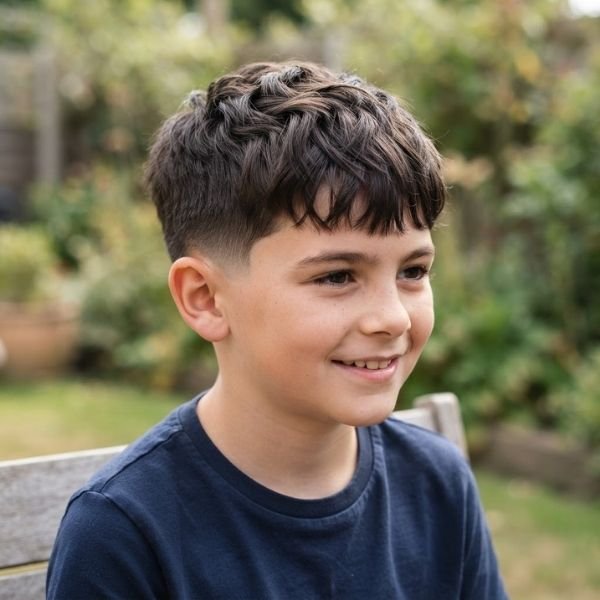
The top is cut short, about 1 to 2 inches, with a choppy finish that needs no combing. It is the lowest effort option and works on straight to wavy hair.
Best for: boys who refuse to brush their hair. Styling: none, or a tiny amount of light cream.
2. Curly Top Mid Fade
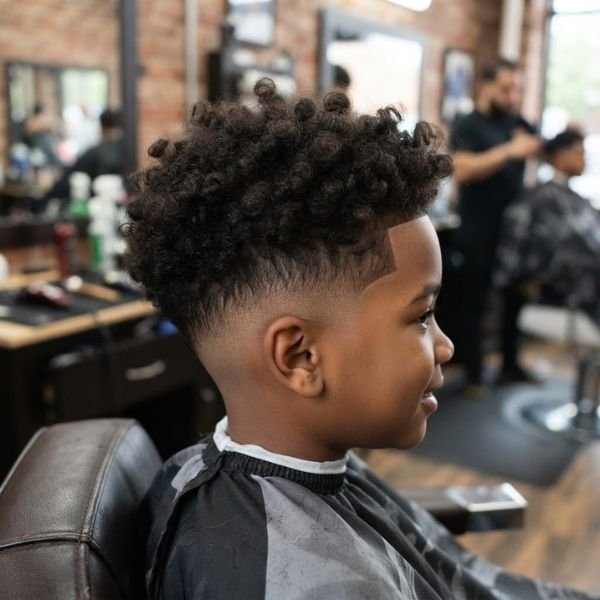
Natural curls stay on top while the sides taper clean. The curls style themselves, so mornings stay quick.
Best for: curly or coily hair. Ask the barber for a soft natural hairline instead of a sharp line-up, which keeps the look gentle and low maintenance.
3. Classic Side Part
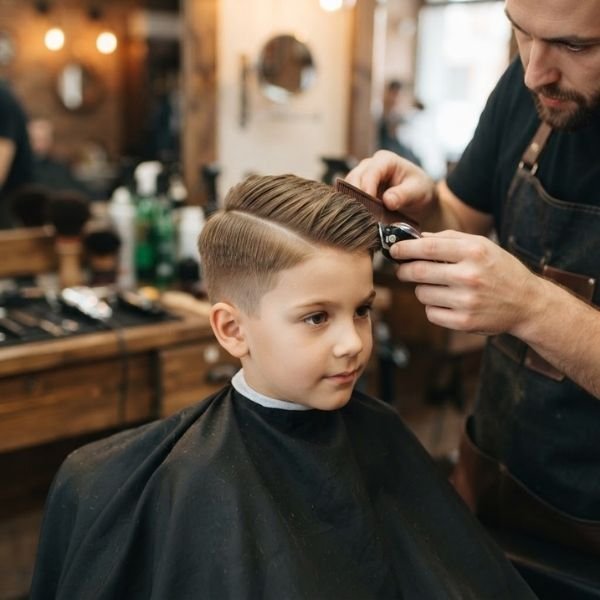
The top sits at about 2 to 3 inches and is combed to one side. It looks sharp in school photos and at family events.
Best for: formal days and straight hair. Styling: comb it while damp with a little water or light cream.
School-Age Boys (Ages 8 to 12)
At this age boys start caring how they look, and they play sports. Choose styles that hold up under helmets, sweat, and quick showers.
4. Textured Fringe with Mid Fade
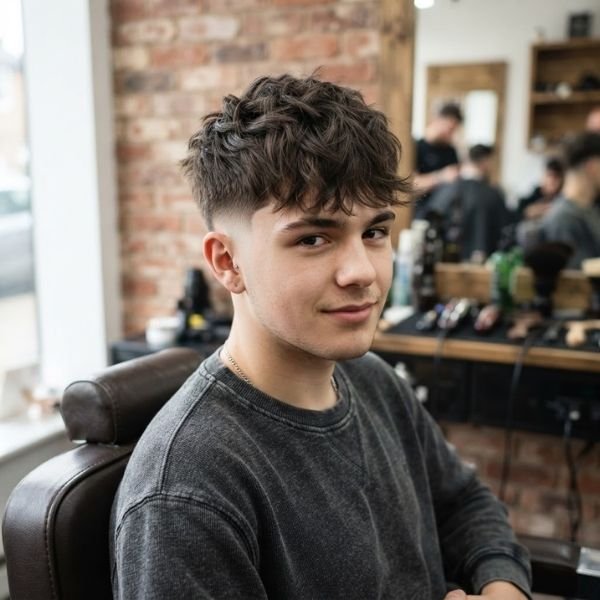
A layered front falls forward over the forehead while the sides stay tapered. Keep the fringe above the eyebrows so it does not block vision during class or sports.
Best for: straight and wavy hair with medium thickness.
5. Mid Fade with Hard Part
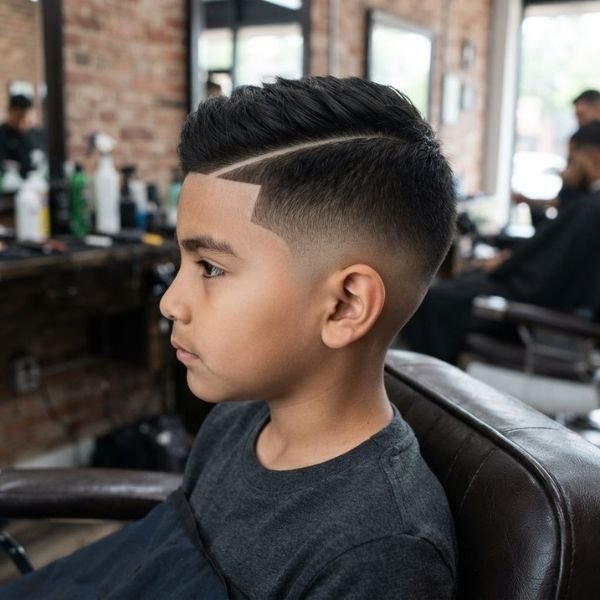
A thin line is shaved into the hair to mark the part. It gives a crisp, grown-up shape without much length on top.
Trade-off: the line blurs within two to three weeks and needs a touch-up. Some schools limit shaved lines, so confirm the rules first.
6. Afro Mid Taper Fade
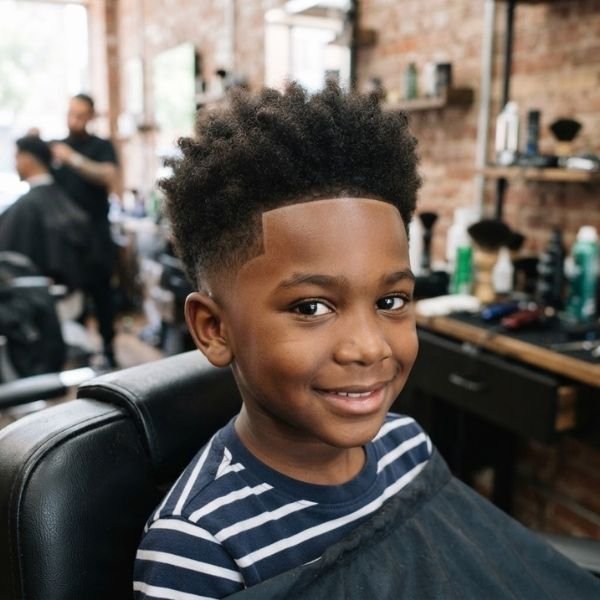
The Afro top is shaped round and kept at roughly 2 to 4 inches, with a mid taper on the sides. It looks bold and stays neat as it grows.
Care tip: moisturize the top a few times a week to prevent dryness and breakage. A light shape-up around the forehead is optional.
7. Spiky Textured Top
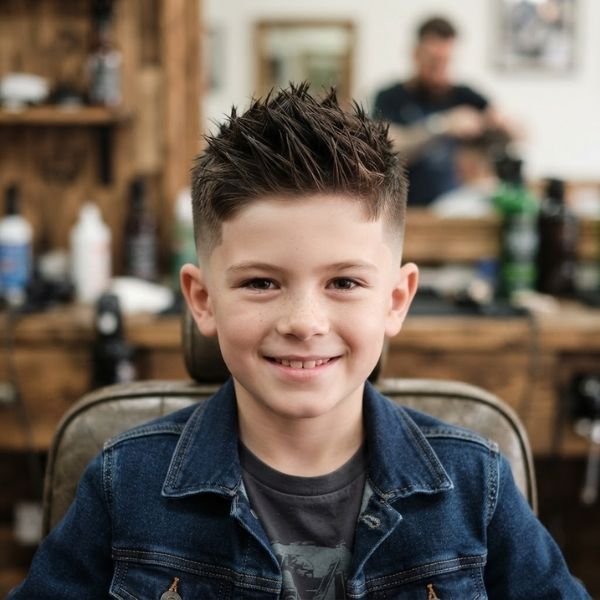
Short spikes are built with a matte clay or paste and a quick run of the fingers. It is playful without being extreme.
Best for: thick, straight hair. Wash the product out nightly so it does not build up on the scalp.
Read More: 25 Best Mid Taper Fade Blowout Haircuts for Men (2026)
Tweens and Teens (Ages 13 to 16)
Teens want more control over their look and will style their hair themselves. These cuts reward a little effort.
8. Mid Taper Fade with Waves
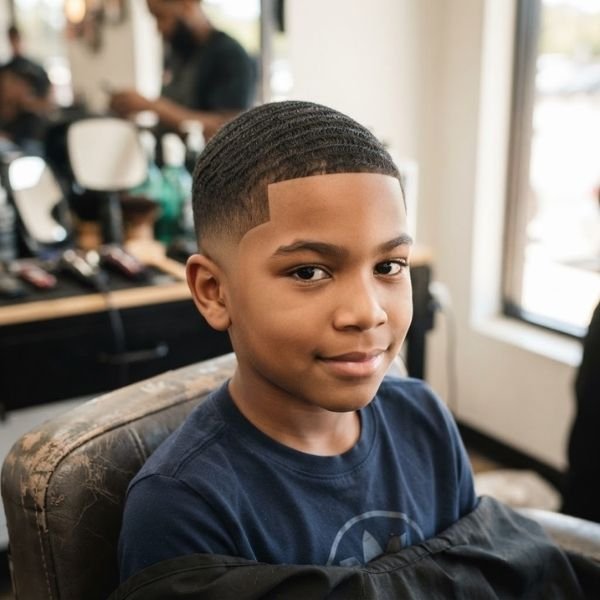
Short, brushed waves ripple across the top over a clean taper. Popular 360 wave styles need regular brushing and moisture to keep the pattern defined.
Honest note: this is the highest maintenance style in the list, so it suits teens who enjoy the routine.
9. Textured Quiff
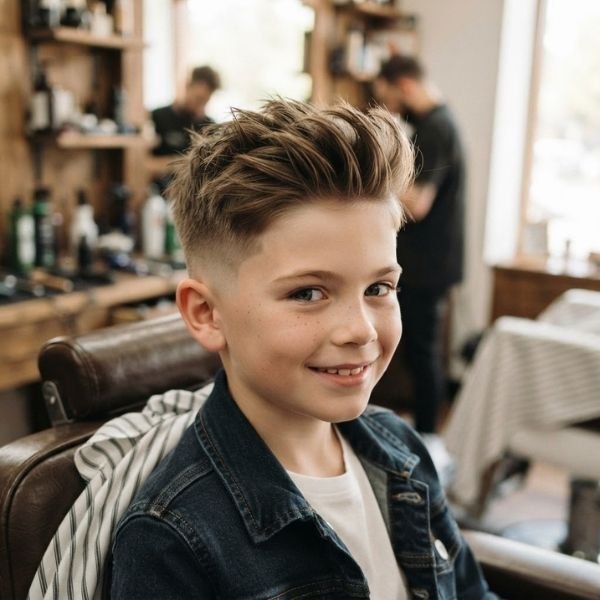
The front is left about 3 to 4 inches and lifted upward, then finished with a matte paste. Blow drying adds height and shape.
Best for: medium to thick hair. Fine hair may struggle to hold the lift.
10. Mid Fade with Design
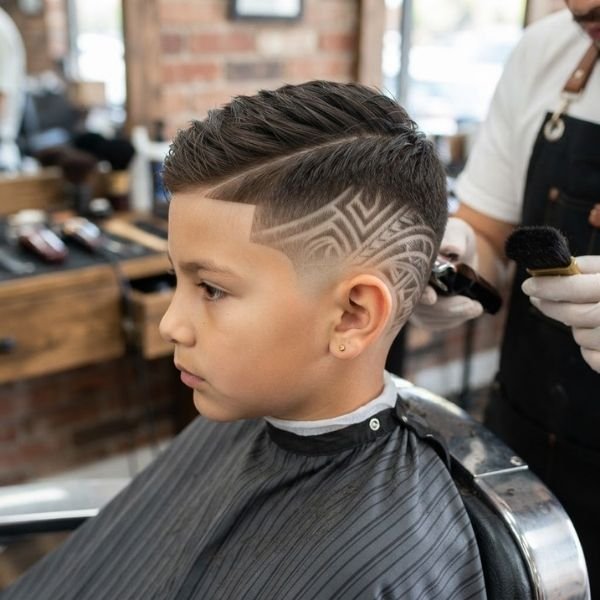
A simple line, small part, or minimal pattern is cut into the side. Keep the design small, since complex art fades in days and can break school rules.
Best for: teens who want a signature detail and will return to the barber every two to three weeks.
Mid Taper Fade for Boys by Hair Type: What Actually Changes
| Hair Type | Top Length | Best Styles | Key Tip |
| Straight | 1 to 3 inches | Textured crop, side part, spiky top | Ask for texture cutting so the top does not lie flat |
| Wavy | 2 to 4 inches | Fringe, quiff, short waves | Let it dry naturally to show the wave |
| Curly | 2 to 3 inches | Curly top, curly fringe | Cut curls damp and avoid heavy brushing |
| Coily or Afro | 2 to 4 inches | Afro taper, waves, high top | Moisturize often and keep the shape even |
| Fine or thin | 1 to 2 inches | Short crop, buzz top | Keep it short because length exposes thin areas |
| Thick | 2 to 4 inches | Quiff, spiky top, fringe | Ask for thinning so the top does not puff out |
Mid Taper Fade for Boys by Face Shape: Quick Matches
Face shape is a small factor, but it helps when two styles feel equal. Use these quick matches as a starting point.
Round Face
Add height on top and keep the sides tight to create length. A quiff, textured crop, or lifted fringe works well. Avoid heavy flat tops that add width.
Oval Face
Oval faces suit nearly everything. A side part, curly top, or textured fringe all look balanced, so choose by lifestyle.
Square Face
Soften the strong jawline with a textured or rounded top. A curly top, loose fringe, or short wavy crop works better than a very boxy flat top.
Mid Taper Fade for Boys: What to Actually Tell the Barber
Vague requests like “short on the sides” lead to surprises. A clear request takes thirty seconds and saves weeks of regret. Follow these steps:
1. Name the cut: say “mid taper” and not just “fade,” since a fade usually goes shorter.
2. Give the starting point: ask for the taper to begin at the temple, level with the top of the ear.
3. Share guard numbers: for example, “#2 at the bottom blending up to a #4.”
4. Describe the top: use inches or point to a photo, and say whether you want scissors or clippers.
5. Choose the neckline: ask for a natural neckline for easy grow-out or a squared one for a crisper look.
6. Mention the school rules: let the barber know about any limits on length, parts, or designs.
Bringing two or three photos of the cut on a similar hair type is the best shortcut. A picture of your son after a haircut he loved works even better.
Mid Taper Fade for Boys: Mistakes Parents Keep Making
Most bad results come from a handful of repeat mistakes. Avoid these and the haircut will look better and last longer.
• Asking for a fade when you mean a taper: this can leave the sides far shorter than expected.
• Going too high on a young boy: a high taper looks harsh on small heads, so stay at mid or lower.
• Ignoring the cowlick: forcing a short top over a strong crown swirl makes it stick up.
• Skipping the school rules: a design or hard part can be a problem on the first day.
• Delaying the refresh: waiting six weeks turns the taper into a shaggy shape.
• Overusing product: heavy gel and wax clog the scalp and make hair look greasy.
The best fix is a regular barber who knows your son’s growth patterns. Consistency matters more than any trend.
Maintenance Reality Check: Keeping the Fade Sharp
A mid taper fade for boys needs a trim every three to four weeks. If your son wears a hard part, a design, or very short sides, move that to two to three weeks. Many families keep a standing appointment so the schedule never slips.
At home, the routine stays simple:
• Wash with a gentle shampoo two to four times a week, depending on hair type.
• Use a light cream or paste in small amounts and wash it out at night.
• Moisturize curly and coily tops to prevent dryness.
• Brush wavy styles daily to keep the pattern in place.
• Check the neckline weekly and book early if it looks fuzzy.
Home touch-ups are possible with clippers and guards, but blending takes practice. Step down guard sizes slowly and use short upward flicks. If it goes wrong, a barber can usually fix it, though it may mean shorter sides.
Read More: 18 Best Mid Taper Fade Black Male Styles (2026)
Mid Taper Fade vs Crew Cut vs Skin Fade for Boys
| Feature | Mid Taper Fade | Crew Cut | Skin Fade |
| Sides and back | Gradual blend starting at the temple | Short, even taper from the top | Blends down to bare skin |
| Top length | Flexible, 1 to 4 inches | Short, often under 1.5 inches | Flexible |
| Contrast | Soft to medium | Low | High |
| Upkeep | Every 3 to 4 weeks | Every 4 to 6 weeks | Every 2 to 3 weeks |
| Best for | Most boys and most schools | Active, low-fuss boys | Teens who want a bold look |
Mid Taper Fade vs Crew Cut
A crew cut is short all over and tapers evenly from the top, with little styling. A mid taper keeps the top longer and shapes the sides, which gives more room to change the look. Choose the crew cut for sports seasons and the mid taper for everyday style.
Mid Taper Fade vs Skin Fade
A skin fade blends down to bare skin, which creates sharp contrast and needs frequent upkeep. A mid taper leaves visible hair, so it looks softer and lasts longer between cuts. For younger boys and strict schools, the taper is usually the safer pick.
Frequently Asked Questions
What is a mid taper fade for boys?
A mid taper fade for boys is a haircut where the sides and back gradually shorten from the temple down, while the top stays longer.
Is a mid taper fade allowed in school?
Usually yes, since it is neat and keeps visible hair. Check the dress code for hard parts and designs.
How often does a boy need a trim?
Every three to four weeks keeps it sharp. Choose two to three weeks if the sides are very short.
What age can a boy get a mid taper fade?
Once the hair is long enough to blend, often around age three. Choose a soft taper for toddlers.
What is the difference between a mid taper and a mid fade?
A taper keeps visible hair at the edges, and a fade goes shorter, often down to skin.
What guard numbers should I ask for?
A common range runs from a #1 or #2 at the bottom up to a #3 or #4, but barbers adjust for hair density.
Does a mid taper fade work on curly hair?
Yes. Keep the curls on top and let the barber taper the sides.
How do I ask the barber for it?
Say “mid taper starting at the temple, a #2 at the bottom, and scissors on top,” and bring a photo.
Conclusion
The mid taper fade for boys works because it balances style, school rules, and effort. It handles every hair type, grows out cleanly, and gives your son room to change the top as his taste changes.
Start with the age group that fits him, match the top to his hair type and face shape, and use the barber script above. Book a trim every three to four weeks and avoid the common mistakes. Which of the 10 styles is your son leaning toward? Share your pick or any questions in the comments.

3 thoughts on “Mid Taper Fade for Boys: 10 Best Styles (2026)”