


The low fade haircut men ask for most often blends short sides into longer hair on top, starting just above the ear and ending at the neckline. It looks clean in an office, works with almost every hair type, and grows out gracefully. This guide covers 22 low fade styles, from the classic cut to the bro flow.
You will also learn what separates a great fade from a rushed one, how to describe your cut to a barber, how a low fade compares with mid and high fades, and how to keep it sharp between visits. Every tip uses plain barber language so you can walk in confident.
Trending Low Fade Haircut Men

A low fade starts just above the ear and the nape of the neck. The hair is cut shortest at the bottom and gets longer as it moves up toward the top of the head. That keeps the cut subtle and easy to wear.
Barbers usually work with guards from a #0 (bare blade) up to a #3 or #4. As a quick reference, a #1 guard leaves about 1/8 inch, a #2 about 1/4 inch and a #3 about 3/8 inch. Exact lengths vary slightly by clipper brand.
Here are 22 low fade styles worth bringing to your next appointment.
Classic Low Fade
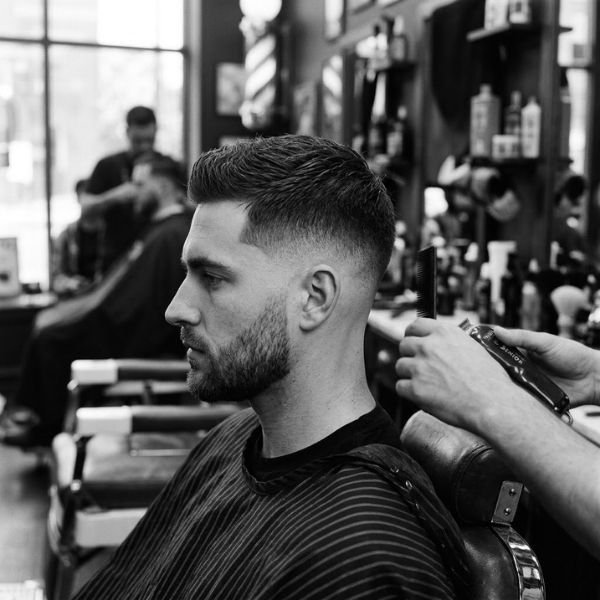
The classic low fade keeps the sides and back short and neat, then leaves about 2 to 4 inches on top. It is the cut most barbers treat as the default.
Part it, comb it back or leave it natural. It works for interviews, weddings and weekend errands.
Low Fade with Curly Hair

Curls and a low fade are a strong match. The short sides show off the curl pattern on top and stop the shape from getting wide and heavy.
Ask your barber to leave 3 to 5 inches on top and to cut curls dry so they can see the real spring. Use a curl cream, not gel.
Low Fade with Straight Hair
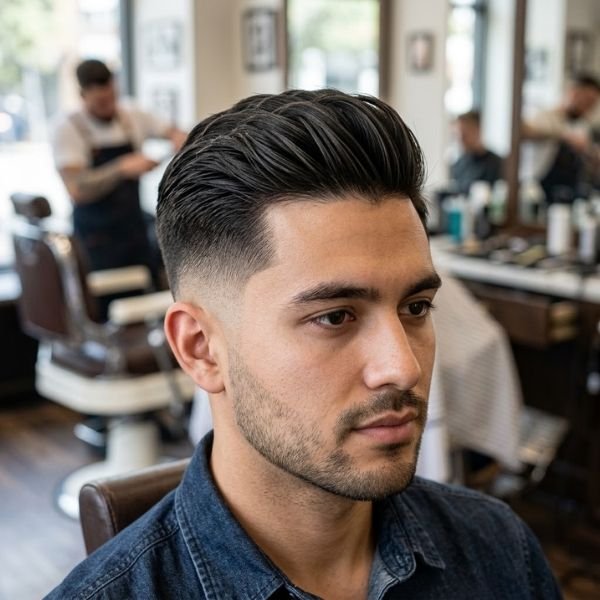
Straight hair shows every line, which makes a clean fade look extra sharp. The top can be cut with light layers so it does not fall flat.
A little matte paste or sea salt spray adds grip and movement. Skip heavy pomades if your hair is fine.
Low Fade with Wavy Hair
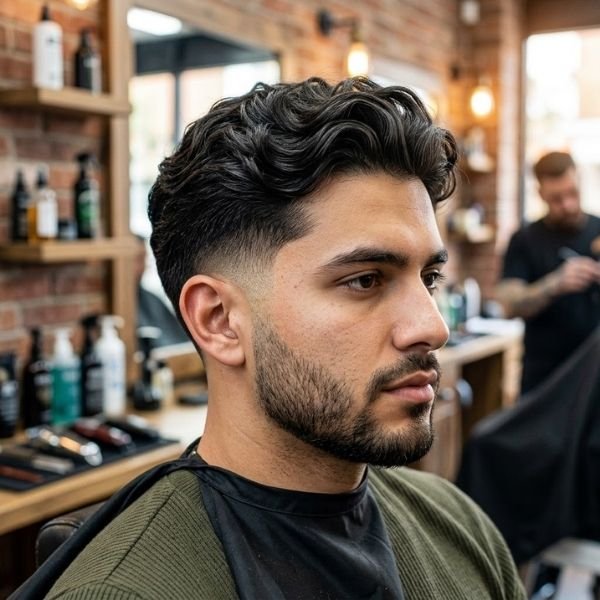
Wavy hair gives you natural texture without much effort. A low fade keeps the sides tidy while the waves on top do the talking.
Air dry with a light mousse or leave-in product. Avoid brushing waves when dry, since that causes frizz.
Read More: Long Buzz Cut Fade: The Complete Guide to Guards, Fades, and Styling
Low Taper Fade

A taper fade is a gentler version of the fade. It trims the sideburns and neckline but leaves more length on the sides than a skin fade.
This is the safest pick for office dress codes and for men trying a fade for the first time.
Low Skin Fade
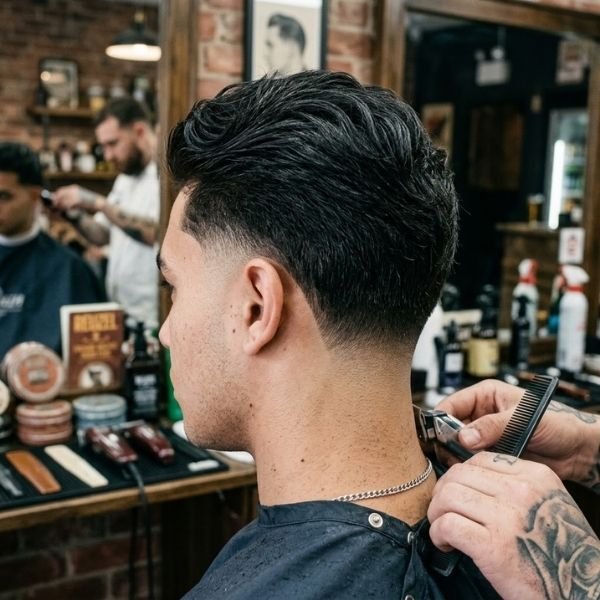
A skin fade, also called a bald fade, goes down to bare skin at the bottom before blending upward. Doing it low keeps the contrast crisp without looking severe.
It needs a visit every two to three weeks. Regrowth shows fast on bare skin.
Low Drop Fade
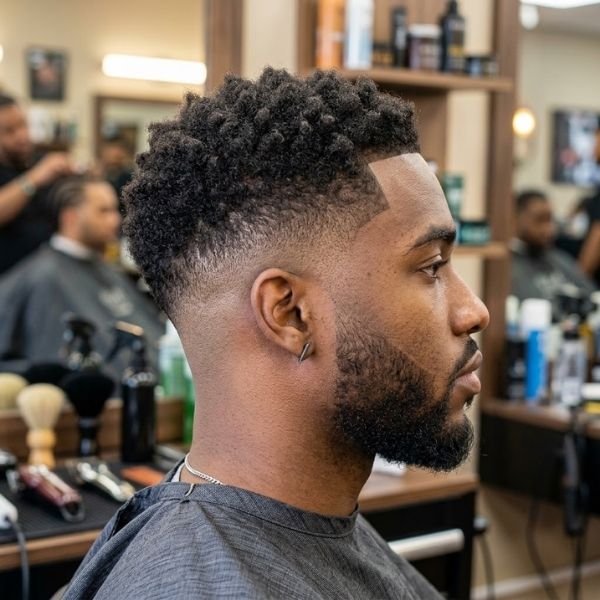
A drop fade curves downward behind the ear instead of running in a straight line. The arc follows the shape of the skull and adds a modern touch.
It looks great from the back and side. Show your barber a photo so the curve lands where you want it.
Buzz Cut with Low Fade
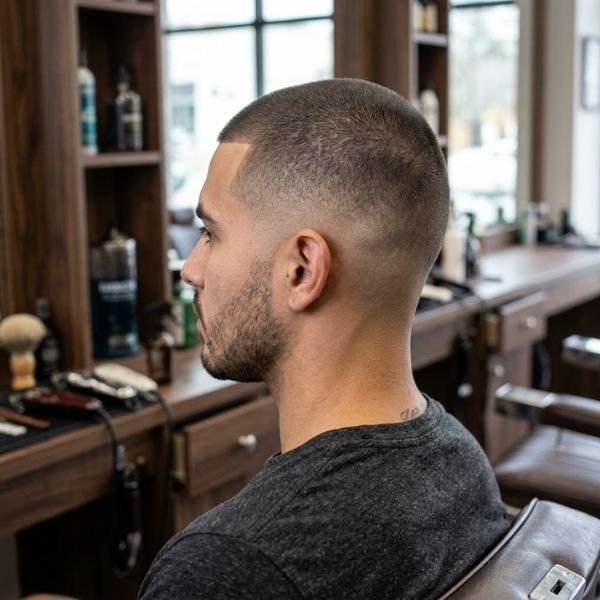
Take a short, even buzz on top, usually a #2 to #4 guard, and blend the sides down into it. The result is minimal and almost no styling is needed.
It suits men with strong jawlines and anyone who wants a five-minute routine.
Pompadour with Low Fade

The pompadour sweeps hair up and back from the forehead for height and volume. A low fade keeps the sides subtle so the top stays the focus.
You need about 4 to 6 inches on top, a blow dryer and a strong hold product.
Fringe with Low Fade

A fringe leaves a short, textured fall of hair across the forehead. Paired with a low fade, it feels youthful and relaxed.
Ask for a point-cut or textured fringe so it looks soft instead of blunt. It works well on straight and thick hair.
Faux Hawk with Low Fade
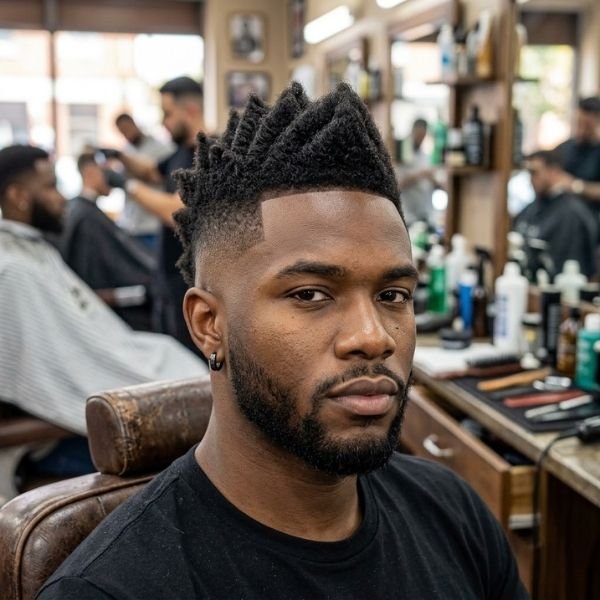
A faux hawk pushes the center of the top upward while the sides stay shorter, without the commitment of a full mohawk. The low fade keeps it wearable.
Use clay or paste and shape the center with your fingers. It adds length to rounder faces.
Undercut with Low Fade
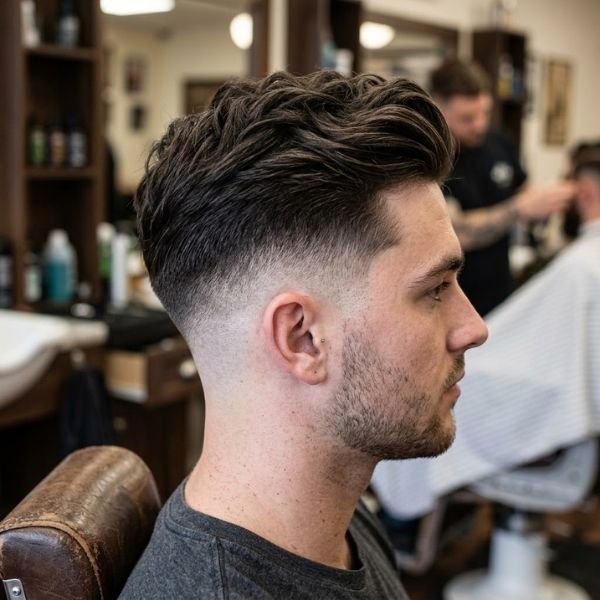
An undercut separates the long top from the very short sides with a clear line. With a low fade, the sides still blend, so it looks softer than a hard undercut.
Think of the slicked-back, short-sided looks seen in the BBC series Peaky Blinders, set in 1920s Birmingham.
Comb Over with Low Fade
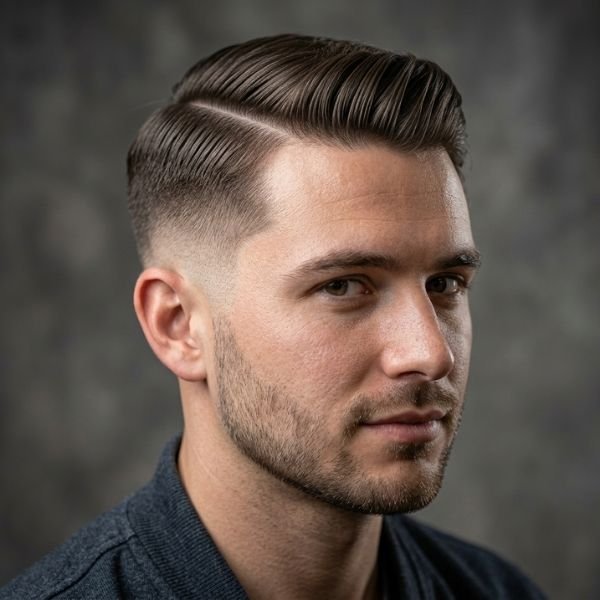
A comb over sweeps the top to one side, usually with a defined part. The low fade gives it a modern edge that feels less old-school.
Use a light pomade and a fine-tooth comb for a polished finish.
Spiky Hair with Low Fade

Short, upright spikes on top with a low fade at the sides make a bold and playful cut. It first took off in the late 1990s and has returned in a softer form.
Use a firm gel or wax, but keep the spikes loose and textured for a current look.
Afro Low Fade
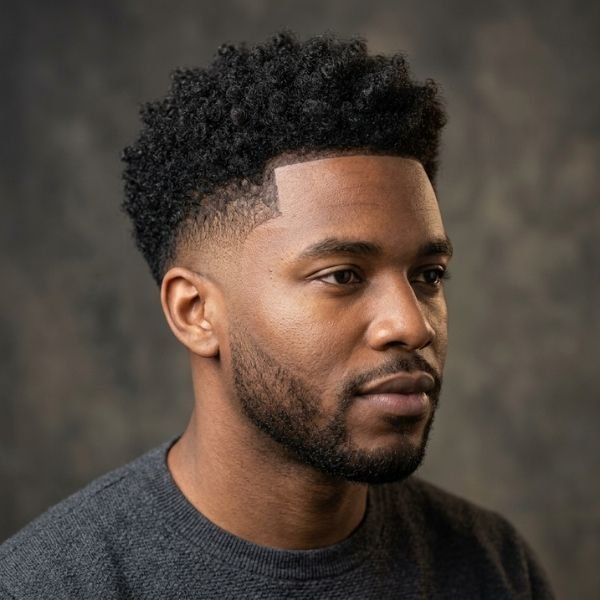
An afro on top with a low fade at the sides gives clean structure to natural hair. The shaped edge-up around the hairline makes the afro look intentional.
Moisturize often and pick out the top gently. Many men also add a sharp temple line for contrast.
Low Fade with Beard

Fading the sideburns straight into the beard creates a smooth line from hair to face. Barbers call this a beard blend.
Keep your beard trimmed to the same length each week. A clean neckline and cheek line make the whole look sharper.
Read More: 12 Guard Buzz Cut: The Complete Length, Look, and Barber Guide
Low Fade with Design (Hard Part/Lines)
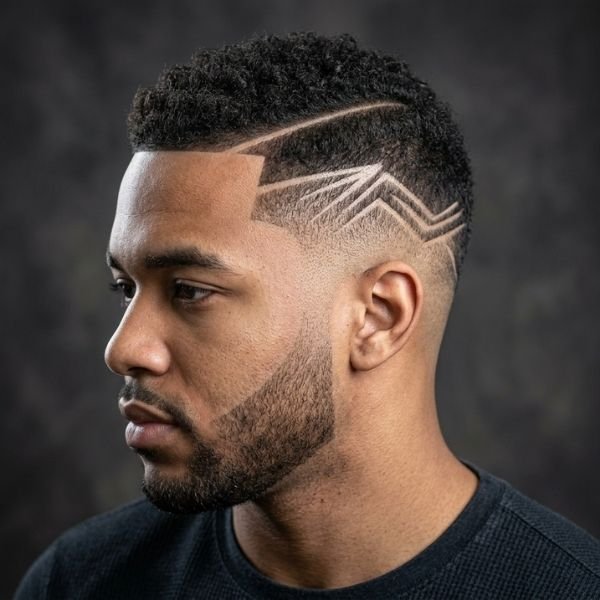
A hard part is a thin line shaved into the hair with a trimmer. You can also add small lines or shapes into the fade for personality.
Pick a barber with proven design skill. These details fade quickly, so plan on touch-ups every week or two.
Low Fade with Textured Top
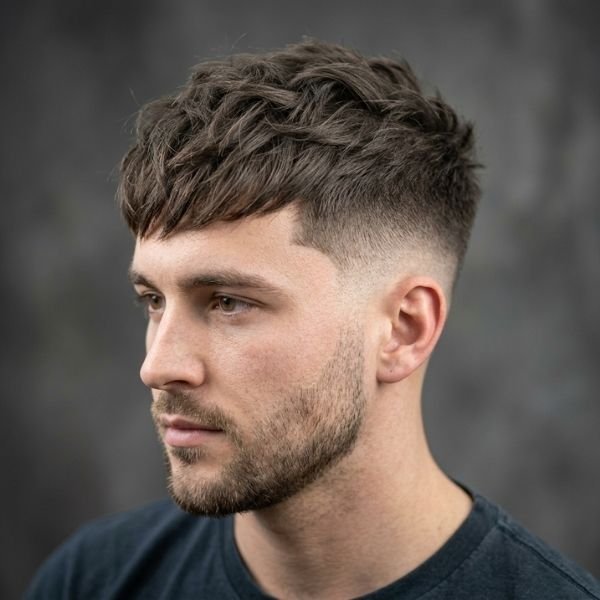
Choppy layers and a matte finish give the top a lived-in look. Paired with a low fade, it is one of the most popular men’s cuts right now.
Rub a pea-sized amount of clay between your palms and scrunch it through dry hair.
Low Fade with Side Part
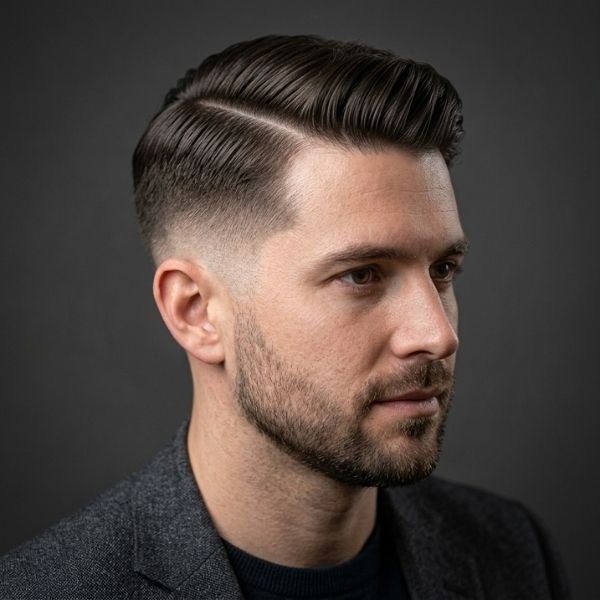
The side part is a timeless shape that suits most men. A low fade clears the ears and neckline so the part stays the center of attention.
Ask for a natural part where your hair already falls, then set it with a light hold product.
Low Fade with Caesar Cut

The Caesar cut is a short cut with a straight, horizontal fringe. It is named after Julius Caesar, and actors like George Clooney helped bring it back in the 1990s.
A low fade makes it feel current. It is a smart choice for thinning hair and receding hairlines.
Low Fade with Messy Hair

Messy does not mean careless. A low fade with tousled, uneven top layers looks easy but keeps the edges clean.
Use sea salt spray, then shape with your fingers. Ideal for creatives and casual dressers.
Low Fade with Bro Flow
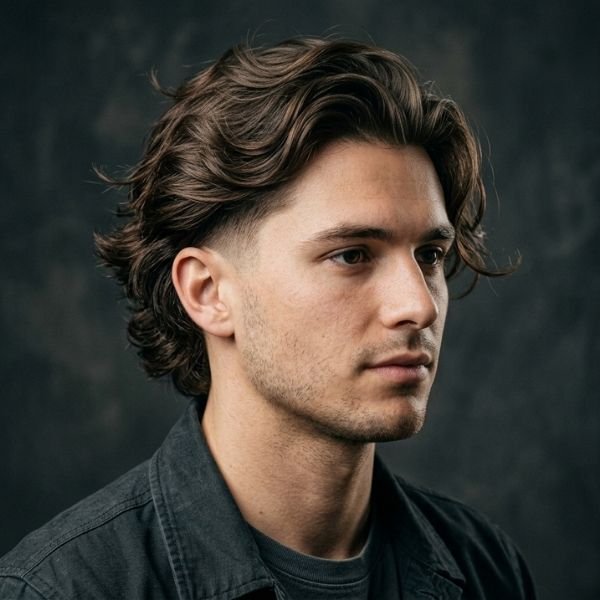
The bro flow is longer hair that is swept back past the ears, usually 5 inches or more. A low fade trims the sides and neck so the flow looks neat, not shaggy.
Use a leave-in conditioner and wash less often to keep the hair soft.
Here’s What Separates a Good Fade from a Great One?
A great fade looks smooth from every angle. There are no steps, no patchy spots and no hard lines unless you asked for one. The blend should look like a soft gradient, not stripes.
Here is what to look for when you check your cut in the mirror:
• Even blending: the hair moves from short to long without visible lines.
• Symmetry: both ears match in height, shape and length.
• Clean edges: the hairline, sideburns and neckline are sharp and consistent.
• Right fit for your head: the fade sits where it suits your head shape, not just where the photo showed it.
• Healthy scalp: no irritation, razor bumps or redness after the cut.
A great fade also comes from the right tools. Barbers use clippers, trimmers, guards and often a straight razor for the final detail. Clipper over comb work, where the barber cuts hair held up by a comb, is a common way to get a seamless blend.
Time matters too. A rushed 15-minute fade is rarely a great one. Most solid fades take 25 to 40 minutes, so book accordingly.
Read More: 21 Best Kids Mullet Haircuts for Boys and Girls in 2026
How to Ask Your Barber for the Right Low Fade Haircut?
To ask for a low fade, say where the fade should start, how short it should go, and what you want on top. Clear words beat vague ones every time. Showing a photo helps even more.
Use this simple five-step script:
1. Name the height: say “low fade” so the barber starts just above the ear.
2. Choose the finish: ask for a taper, a skin fade or a drop fade.
3. Give a number: tell them the shortest guard, such as #1 or #0.5, and the length you want on top.
4. Describe the top: mention if you want a side part, textured crop, pompadour or something else.
5. Show a photo: bring one that matches your hair type, since curly and straight hair fade very differently.
Do not forget the details. Say whether you want the neckline rounded, squared or tapered, and if the beard should blend in. If you are unsure, ask the barber what suits your hair and face. A good barber will tell you honestly.
Tip: it is easier to take more off later than to put it back. If you are trying a fade for the first time, start with a longer guard and ask for it shorter on your next visit.
Low Fade vs Other Fade Types: Which One Actually Suits You?
| Feature | Low Fade | Mid Fade | High Fade |
| Starts at | Just above the ear | Around the temple | High on the sides |
| Look | Subtle and clean | Balanced | Bold and dramatic |
| Best for | Offices, first-timers, thinning hair | Most men | Short tops, strong style |
| Upkeep | Every 3 to 4 weeks | Every 2 to 3 weeks | Every 2 weeks |
The Evolution of Low Fade Haircut
Fades have roots in military barbering. Short, tapered sides were common in crew cuts worn by soldiers in the early to mid 1900s, since they were neat and practical.
Black barbershops in the United States pushed the technique much further. By the 1980s and 1990s, fades showed up in hip-hop culture, including the high-top fade popularized by the duo Kid ‘n Play. Barbers turned the fade into a craft with sharp lines and complex designs.
In the 2010s, the skin fade and undercut spread worldwide through barbershops and TV. Today the low fade is the softer, everyday version, and it is the starting point for most modern cuts. It reflects a wider shift toward clean but natural grooming.
Low Fade Haircut Maintenance: Keeping It Sharp Between Visits
A low fade stays sharp for about three to four weeks before the blend starts to grow in. A skin fade needs a touch-up sooner, around two to three weeks.
These habits keep the cut fresh at home:
• Book the next visit before you leave the chair, ideally every 3 to 4 weeks.
• Wash hair two to four times per week with a mild shampoo, and condition longer hair.
• Moisturize your scalp, especially after a skin fade, to avoid dryness and flaking.
• Use the right styling product: paste or clay for texture, pomade for shine, cream for curls.
• Tidy the neckline at home with a trimmer only if you are comfortable, and leave the fade itself to your barber.
• Sleep on a silk or satin pillowcase if you have curly or textured hair to reduce frizz.
Apply sunscreen to the exposed skin on the sides, since a fade leaves more of the scalp visible. If you notice razor bumps, tell your barber so they can adjust the technique.
Conclusion
The Low Fade Haircut Men works because it is flexible. It can be sharp or relaxed, short or long on top, simple or detailed. With 22 styles to choose from, you can find one that matches your hair type, face shape and daily routine.
Pick a style, bring a photo, speak in clear barber terms and book regular touch-ups. Do that, and your next cut will look sharp from day one until the next visit. Which style will you try first? Share it in the comments or send this guide to a friend who needs a fresh cut.
FAQ’s
What is a low fade haircut?
It is a cut where the sides and back fade from short to longer hair, starting just above the ears and neckline.
How long does a low fade last?
A low fade looks sharp for about 3 to 4 weeks before it starts to grow out.
Is a low fade better than a high fade?
Neither is better. A low fade is subtler and easier to maintain, while a high fade is bolder.
Can I get a low fade with curly hair?
Yes. A low fade works well with curls and keeps the sides neat while your texture shows on top.
What guard number is used for a low fade?
Barbers usually start with a #0 to #1 at the bottom and blend up to a #2 to #4.
Does a low fade work with thinning hair?
Yes. Short, clean sides make thinning hair look tidier, especially with a short top.
How much does a low fade cost?
Prices vary by city and barber, but most low fades cost between $20 and $50.
How often should I get a low fade?
Every 3 to 4 weeks for a regular low fade, and every 2 to 3 weeks for a skin fade.

1 thought on “Low Fade Haircut Men: 22 Fresh Styles for a Sharp Look”