


A mid taper fade with design is a mid-height taper cut with a shaved line, symbol, or pattern etched into the sides or back for extra detail. It keeps the soft, gradual blend of a standard mid taper but adds a personal touch through razor work.
This guide walks through the ten most requested designs for 2026, how to match one to your hair type and face shape, and how to keep it looking sharp between barber visits. Whether you want something subtle like a single line or something bold like a spider web pattern, there’s a version here that fits your style and your maintenance routine.
What Is a Mid Taper Fade with Design?
A mid taper fade with Design sits between a low and high fade, starting its blend around the middle of the head and gradually shortening toward the hairline. Adding a design means a barber uses clippers and a straight razor to carve a shape, line, or pattern into that faded section, usually on the side above the ear or along the back of the head. The base cut stays the same length and structure as a plain mid taper, so the design becomes the focal point rather than a change to the overall shape. Most barbers freehand simple designs directly with a trimmer, while more detailed patterns are sometimes sketched or outlined first for accuracy.
Why Mid Taper Fade with Design Is So Popular in 2026
Men are leaning into haircuts that feel personalized rather than generic, and a design is one of the quickest ways to make a common cut look distinct. Social media and barbershop culture have also pushed freestyle linework into the mainstream, with barbers showcasing intricate patterns as a form of craft.
The mid taper itself remains a favorite because it’s more forgiving than a skin fade and doesn’t require weekly trims just to keep the blend clean. Combining that low-maintenance base with an eye-catching design gives men a style that stands out without demanding a drastically different haircut underneath.
Pros and Cons
Before booking a design, it helps to weigh what you’re gaining against what it takes to maintain.
- Pros: adds a unique, personalized detail; works with most hair types and lengths; can be simple or elaborate depending on your comfort level; easy for a barber to add during a normal appointment
- Cons: shaved lines grow out and blur faster than the surrounding taper; requires more frequent touch-ups than a plain mid taper; bold designs can look messy if not refreshed on schedule; not every workplace or setting welcomes a very bold pattern
Weighing these points against your lifestyle and how often you can realistically see a barber will point you toward the right level of detail.
10 Best Mid Taper Fade with Design Ideas
These ten styles range from a single subtle line to full statement patterns, so there’s an option whether you’re trying a design for the first time or want something bold.
Read More: Mid Taper Fade Buzz Cut — Styles, Clippers & At-Home Guide (2026)
Classic Line Designs
Line designs are the most common starting point because they’re quick for a barber to execute and simple to keep sharp.
1. Single Line Design
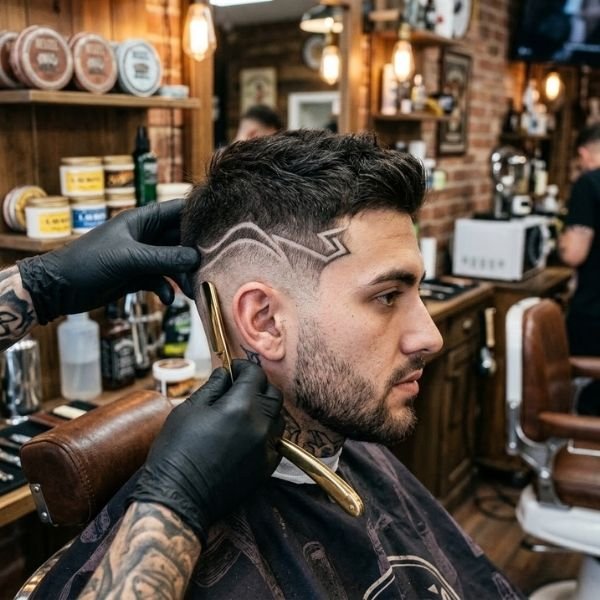
A single line design is one straight or slightly curved shaved line running through the fade, usually just above the temple. It’s the easiest design to maintain since there’s only one edge to keep crisp, making it a smart pick for a first attempt. This style pairs well with almost any top length and doesn’t compete with other styling choices you might make.
2. Double Line Design
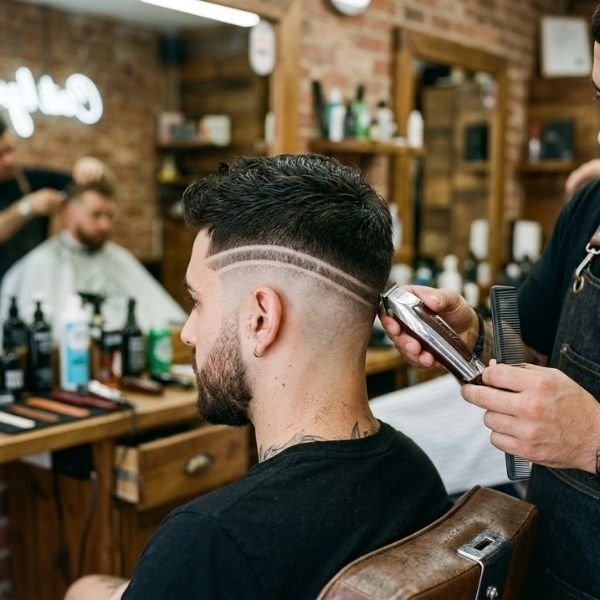
Two parallel lines add a bit more visual weight while staying just as easy for a barber to trace during a touch-up. The gap between the lines can be adjusted for a thinner, more refined look or a wider, bolder statement. It works especially well on straight or short curly hair where the contrast between shaved line and hair stays crisp.
3. Side Part Line Design
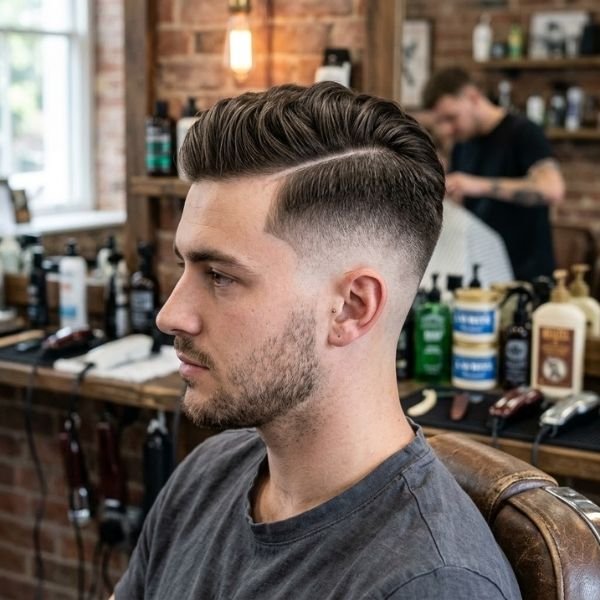
This design follows the natural part line on top, extending it down into the fade for a cohesive, intentional look. It’s a subtle way to tie the top style and the sides together without introducing a completely separate pattern. Men who already wear a defined side part will find this one of the easiest transitions into design work.
Symbol & Shape Designs
Symbol and shape designs bring a little more personality, often reflecting something meaningful to the wearer.
4. Cross Design
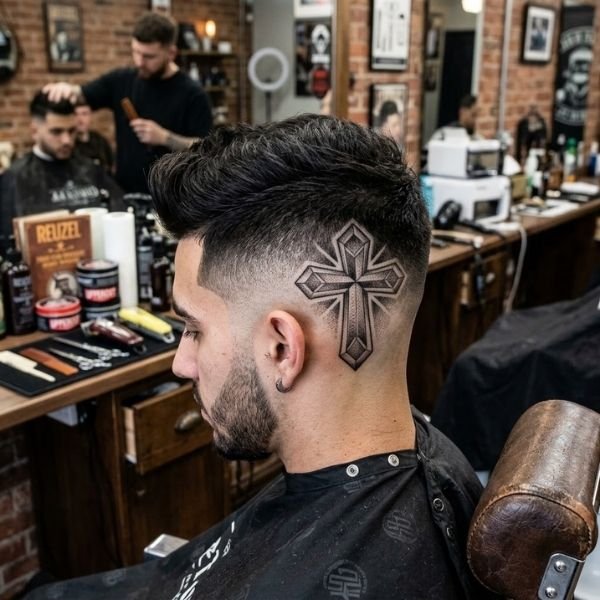
A cross design is a compact symbol usually placed near the temple, small enough to stay clean between visits. Because it’s a closed shape rather than an open line, it can blur slightly faster and benefits from more frequent upkeep. It’s a popular choice for men who want a symbolic touch without a large or busy pattern.
5. Star Design
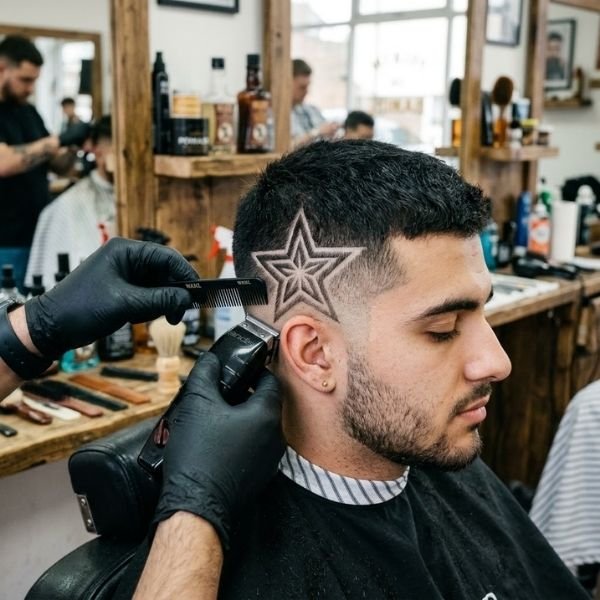
A star design adds a playful, eye-catching detail and works well as a single accent piece rather than a repeated pattern. Barbers typically keep the star small and proportional to the fade so it doesn’t overwhelm the rest of the cut. This one tends to suit shorter top lengths where the design has more room to stand out.
6. Zigzag Design
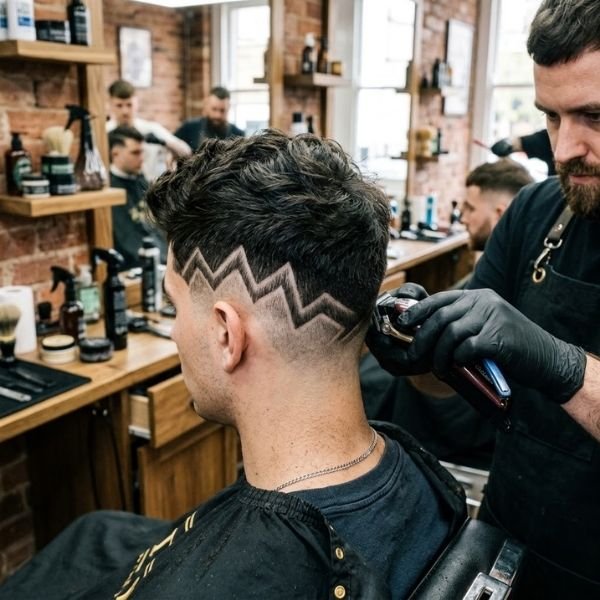
A zigzag pattern runs a jagged, angular line through the fade instead of a straight one, giving a more dynamic feel. It takes slightly more skill to execute cleanly than a straight line, so it’s worth choosing a barber experienced with freehand work. The angular shape tends to photograph well and holds its definition a bit longer than curved patterns.
Bold Statement Designs
For men who want their design to be the centerpiece of the haircut, these bolder options deliver more visual impact.
7. Spider Web Design
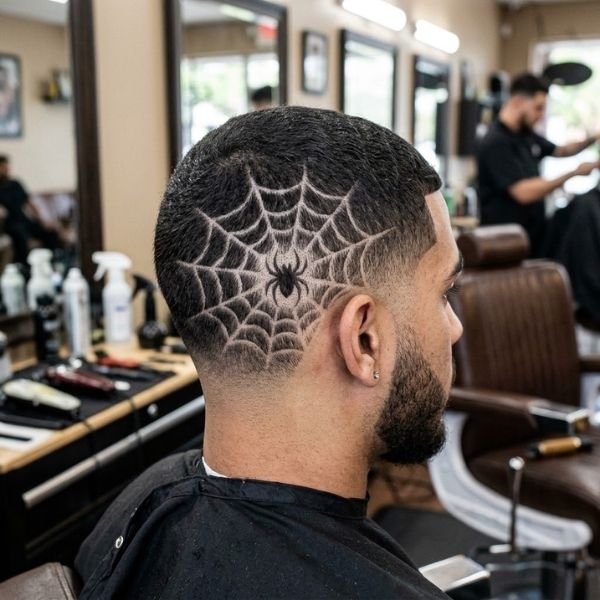
A spider web design covers a larger section of the fade with a radiating, interconnected pattern that demands attention. This is one of the most detailed options on the list and typically needs the most frequent touch-ups to stay sharp. It works best for men who see their barber often and want a statement piece rather than a subtle accent.
8. Geometric Pattern Design
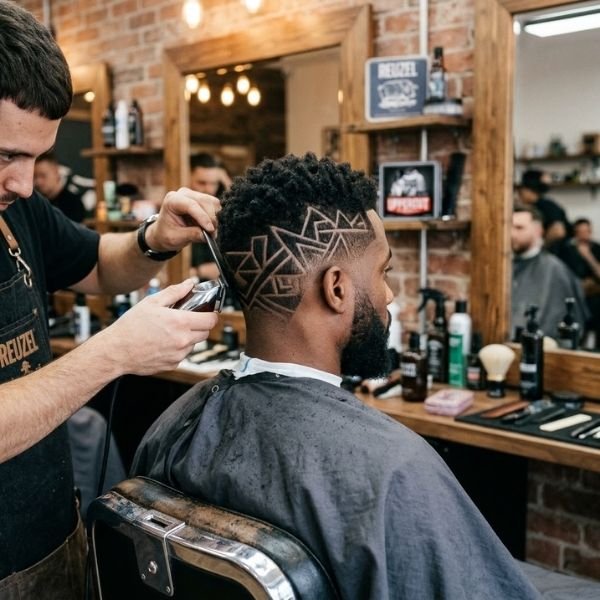
Geometric patterns use straight lines, triangles, or repeating shapes for a modern, almost architectural look. These designs give a barber more room to get creative while still keeping the overall structure clean and organized. Straight or coarse hair tends to show off geometric linework with the sharpest contrast.
Placement Variations
Where a design sits changes how noticeable it is day to day, which matters for both personal style and workplace expectations.
9. Back Design
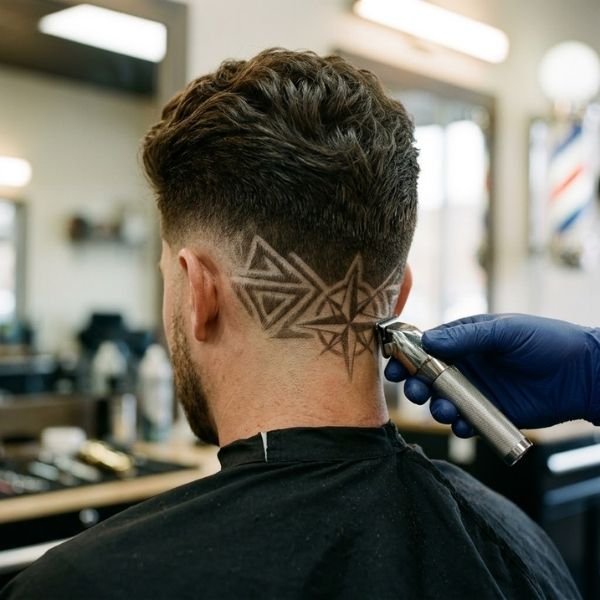
Placing a design at the back of the head, near the nape, keeps it mostly hidden during everyday interactions. This makes it a good compromise for men who want a design but work in a more conservative environment. It also tends to stay looking fresh a bit longer since it gets less friction from hats or sleeping positions.
10. Initial or Letter Design
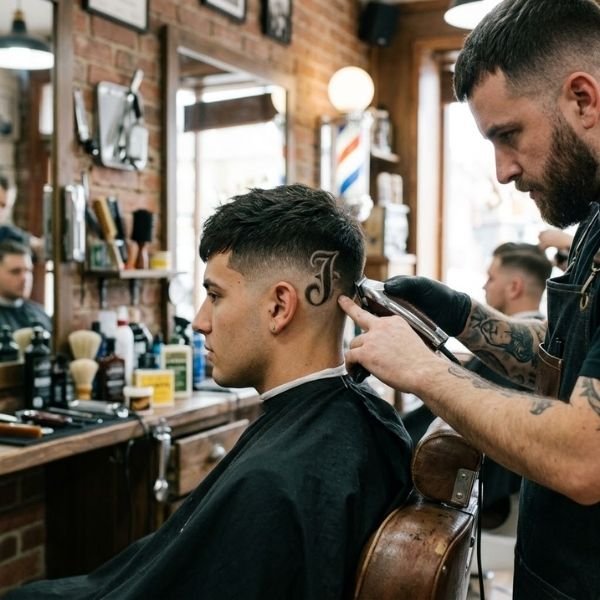
An initial or letter design personalizes the cut further, often representing a name, nickname, or meaningful reference. It requires precise freehand skill, so it’s worth confirming your barber has experience with lettering before committing. Placement near the side or back both work, depending on how visible you want the detail to be.
How to Choose the Right Design for Your Hair Type
Hair texture affects how clearly a design shows and how long it stays sharp, so it’s worth matching the pattern to what you’re working with.
Read More: Mid Taper Fade with Bangs: The Secret to Sharp Looks 2026
Straight Hair
Straight hair gives the cleanest, most defined contrast for any design, since there’s no natural texture to soften the lines. Detailed patterns like geometric designs or lettering tend to look their sharpest on this hair type.
Curly Hair
Curly hair can hide simple designs if the top is left long, so keeping length shorter near the design area helps it stay visible. Bold, larger shapes generally read better than fine lines on curly texture.
Wavy Hair
Wavy hair sits somewhere between straight and curly, usually showing medium-detail designs clearly without much extra upkeep. A single or double line design tends to blend nicely with the natural movement on top.
Coily and Afro-Textured Hair
Coily and afro-textured hair benefits from a shorter fade area around the design so the contrast stays clean against the natural volume on top. Simple, bold shapes generally outperform intricate patterns on this texture.
Fine Hair
Fine hair shows lines and shapes with strong contrast, but any design can blur a little faster since there’s less hair to frame it. Sticking with a simple line or symbol keeps upkeep manageable on fine strands.
Best Mid Taper Fade Designs by Face Shape
A well-placed design can complement your face shape just as much as the haircut itself, drawing attention where you want it.
Oval Face
Oval faces suit nearly every design on this list, since the balanced proportions don’t require much visual correction.
Round Face
A design placed higher on the side, like a single or double line, can add angular structure that balances rounder features.
Square Face
Square faces pair well with softer, curved elements like a zigzag design to offset the strong jawline.
Heart-Shaped Face
A design kept lower, closer to the ear, helps balance a wider forehead common with heart-shaped faces.
Long Face
Horizontal or wider placement, such as a side part line design, helps break up length and add visual width.
Diamond Face
Bold statement designs like a geometric pattern work well here, since diamond faces can carry more detail without looking busy.
Rectangular Face
A back design keeps focus off the face’s length while still adding a personalized detail to the overall cut.
Best Mid Taper Fade Designs by Age Group
Age and lifestyle often shape how bold a design someone is comfortable wearing.
Teenagers
Teenagers tend to gravitate toward bolder, more expressive options like star or spider web designs, since school and social settings are usually more flexible.
Young Men
Young men often land in the middle, favoring geometric patterns or initials that feel personal without being overly dramatic.
Professional Men
Professional men typically lean toward subtle options like a single line or back design that stays sharp without drawing too much attention in a workplace setting.
How to Ask Your Barber for a Mid Taper Fade with Design
Being specific with your barber makes it far easier to get a result you’re happy with.
- Bring a reference photo of the exact design and placement you want
- Mention your base cut clearly as a mid taper fade with Design before discussing the design details
- Ask which guard sizes they plan to use so you understand how dramatic the fade contrast will be
- Confirm how often you’ll need touch-ups to keep the specific design you’ve chosen looking sharp
- Ask whether the design will be freehanded or sketched first, especially for detailed patterns
Common Mid Taper Fade Design Mistakes to Avoid
A few recurring mistakes can make an otherwise good design look sloppy fast.
- Choosing a design that’s too detailed for a first attempt, making touch-ups harder to maintain consistently
- Letting the design grow out too long before a touch-up, causing the lines to blur and lose definition
- Skipping a reference photo and relying only on a verbal description, which often leads to miscommunication
- Picking a placement that clashes with how you naturally style your top hair
- Choosing a barber without freehand design experience for a detailed or lettered pattern
How to Maintain a Mid Taper Fade with Design
Keeping a design looking fresh takes more attention than a plain taper, since the shaved lines are the first thing to lose their edge.
Touch-Up Frequency
Most designs need a refresh every one to two weeks, noticeably more often than the two to three weeks a plain mid taper can usually stretch between visits. Bolder, more detailed patterns like a spider web design tend to need touch-ups on the shorter end of that window.
At-Home Touch-Ups
Between barber visits, a trimmer with a fine detail blade can help clean up the neckline and any surrounding stray hairs without touching the actual design. It’s best to leave the design lines themselves to your barber, since even a small slip can blur or ruin the pattern.
At-Home Touch-Ups
A light, non-greasy scalp moisturizer can help keep the skin around the design healthy and prevent flaking that makes the lines look less crisp. Avoid heavy oils or products directly on freshly shaved lines, since buildup can dull the contrast that makes a design pop.
Read More: Mid Taper Fade Curly Hair: 17 Styles That Work (2026)
Mid Taper Fade with Design vs Other Styles
Comparing a design to other popular taper approaches makes it easier to decide if the extra upkeep is worth it for you.
Design vs Plain Mid Taper
A plain mid taper offers a clean, low-maintenance blend without any added detail, while a design version trades some of that convenience for a more personalized look. If you’re not ready for the extra touch-up schedule, a plain mid taper still delivers a sharp, versatile cut on its own.
Design vs the 3-2-1 Guard Technique
The 3-2-1 guard technique refers to using three progressively shorter clipper guards to build a smooth blend, and it’s often the foundation underneath a design rather than a competing style. A design is typically added on top of a taper built with this technique, so the two work together rather than as separate choices.
Frequently Asked Questions
What is a mid taper fade with design?
It’s a mid-height taper haircut with a shaved line, symbol, or pattern added into the fade, usually on the side or back.
How long does a design last before it grows out?
Most designs stay sharp for about one to two weeks before the lines start to blur and need a touch-up.
Does a design work with curly or afro-textured hair?
Yes, though keeping the top slightly shorter near the design helps it stay clearly visible against the natural texture.
What’s the easiest design for a first-timer?
A single line design is the simplest option, since it’s quick to execute and easy to keep looking sharp between visits.
Can a design be added to an existing mid taper without a full recut?
Yes, a barber can usually add a design during a regular touch-up appointment without changing the rest of the taper.
Does hair color affect how visible a design is?
Very light or very dark hair can make some designs harder to see clearly, so it’s worth discussing color with your barber beforehand.
Where should I place a design if I want it to stay subtle?
A back design near the nape stays less visible day to day than one placed near the temple or side.
Conclusion
A mid taper fade with design gives you a way to keep the versatile, low-maintenance base of a mid taper while adding a detail that’s entirely your own. Starting with something simple like a single line is the easiest way to test the style before committing to a bolder pattern.
Whatever design you choose, matching it to your hair type, face shape, and how often you can realistically see your barber will keep it looking its best in 2026.
