


A mid taper fade with bangs pairs a clean, gradual fade that starts around the temple with a soft fringe left long on top, giving you a cut that looks sharp at the sides and relaxed up front. It works for straight, wavy, and curly hair, and it suits everyone from teenagers to professionals who still want a bit of edge.
This guide walks through what the cut actually is, six style variations to try, the mistakes that ruin a fringe fastest, how to style it day to day, which face shapes it flatters most, and the exact words to use with your barber so you get it right the first time.
What is a Mid Taper Fade with bangs?
A mid taper fade with bangs is a haircut where the sides and back gradually shorten from the mid point of the head down to the skin or a short guard, while the front section is left long enough to fall forward as a fringe.
The fade itself usually starts somewhere between the top of the ear and the temple, which keeps the transition soft rather than sharp. The bangs sit on top, usually kept between two and four inches long, and they are cut to fall across the forehead instead of being pushed back.
The result is a cut that reads as tidy from the sides but has movement and personality up front, which is why barbers describe it as a low effort way to add contrast to an otherwise classic fade.
What is the difference between a mid fade and a mid taper?
People use these two terms interchangeably, but they describe slightly different techniques.
A mid fade blends the hair down to the skin, creating a hard, visible line between the longer top and the shaved sides. A mid taper gradually shortens the hair without necessarily reaching the skin, so the transition is softer and less dramatic. A mid taper fade combines both, tapering the length first and then fading the shortest section down to the skin for a cleaner finish.
Read More: Mid Taper Fade Curly Hair: 17 Styles That Work (2026)
| Style | Starting Point | Finish at the Skin? | Best For |
| Mid Fade | Midway between ear and temple | Yes, usually skin fade | Sharp, high contrast looks |
| Mid Taper | Midway point, gradual shortening | No, stops at a short guard | Natural, low contrast, office friendly |
| Mid Taper Fade | Midway point, tapers then fades | Yes, at the bottom of the fade | Balanced texture with a defined edge |
Why is the Mid Taper Fade with bangs so popular in 2026?
This cut has held its place as one of the most requested men’s styles because it works across ages, hair types, and settings without needing constant upkeep.
It sits in the middle of the fade spectrum, so it is not as severe as a high fade but still has more definition than a low fade, which makes it flexible for both casual and formal environments. K pop and street style influences have also pushed fringe focused cuts into the mainstream over the past couple of years, and the mid taper gives that same textured, face framing look without needing to grow the whole head out.
Barbers also point to how well it adapts to different hair textures. Straight hair holds the fringe flat for a clean line, wavy hair adds natural movement, and curly or coily hair gives the top extra volume, so the same base cut can look different on almost anyone.
6 Mid Taper Fade Styles with Bangs to Try
Once you have the base cut, the fringe on top is where you get to personalize the look. Here are six variations worth bringing to your next appointment.
1. Short bangs with mid-taper fade
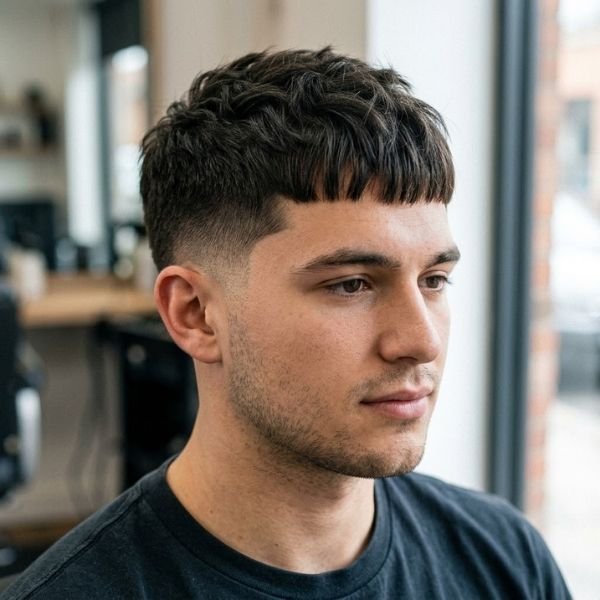
Short bangs sit just above the eyebrows and are cut with a straight or slightly rounded edge. This version keeps maintenance low since the fringe rarely needs trimming more than once every few weeks, and it works especially well on straight or fine hair that would otherwise look flat without a defined shape up top.
2. Curtain fringe with mid-taper fade
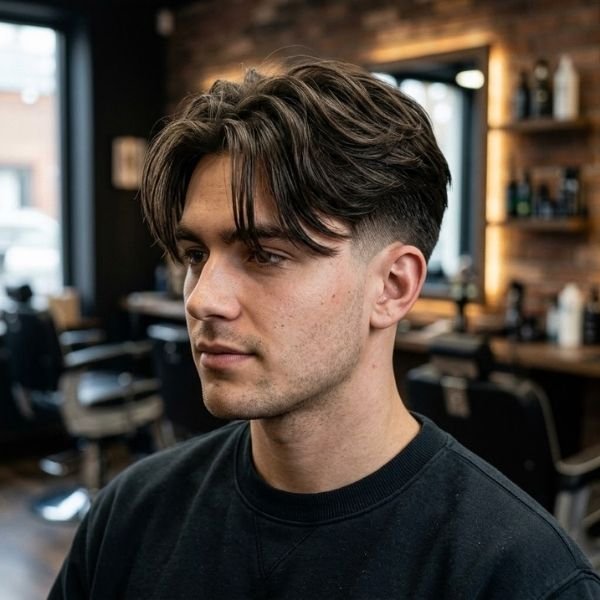
Curtain bangs part naturally down the middle and sweep to either side, framing the face rather than covering the forehead. This pairing softens angular features and works particularly well with a mid taper because the clean sides balance out the fuller, parted top, keeping the overall silhouette from looking too heavy.
3. Side-swept bangs with a mid-taper fade
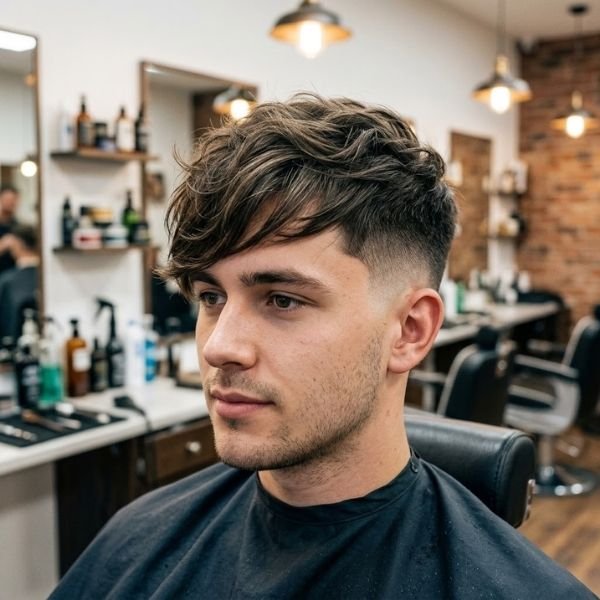
Here the fringe is cut on an angle and brushed to one side using a light pomade or clay. It is a good option for anyone who wants a slightly more formal finish, since sweeping the bangs to the side keeps hair off the eyes while still showing off the taper along the sides.
4. Tapered fringe with mid-taper fade
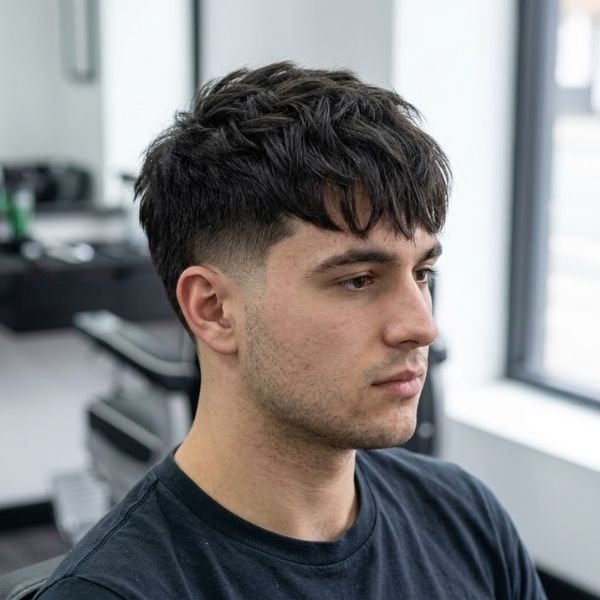
Instead of a blunt line, the fringe itself is tapered and point cut so it thins out gradually rather than ending in a straight edge. This creates a softer, more natural transition between the fringe and the rest of the top, and it tends to suit thicker hair that would otherwise look bulky with a blunt cut.
5. Bangs with Mid Taper Fade and Blowout Effect
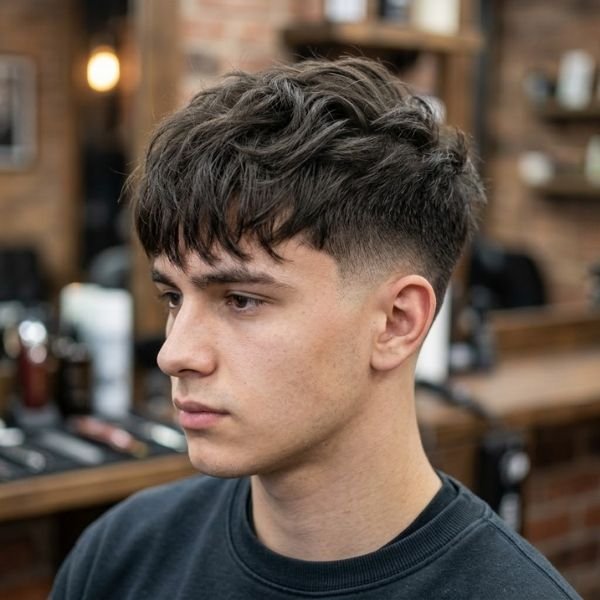
This version adds height by blow-drying the roots of the fringe upward before letting the ends fall forward, creating volume without losing the forward sweep of the bangs.
- Use a round brush during drying to lift the roots
- Apply a light volumizing mousse before drying, not after
- Finish with a low shine paste to keep movement without flattening the lift
6. Wavy fringe with mid-taper fade
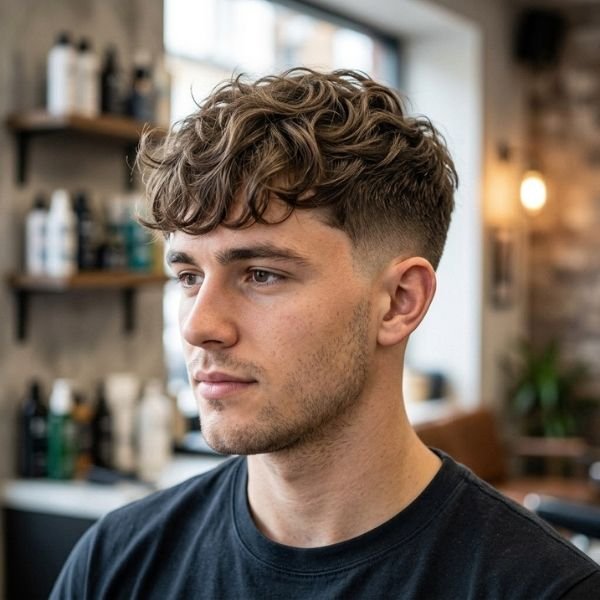
For naturally wavy or curly hair, this style leaves the waves untouched rather than straightening them, letting the fringe fall with its natural texture. A curl cream or light gel applied to damp hair helps define the waves without weighing them down, and this pairing tends to require the least daily styling effort of all six variations.
Common mistakes to avoid when doing a mid-taper fade with bangs.
A fringe is one of the easiest parts of a haircut to get wrong, mostly because small errors in length or technique show up immediately on the face. Here are the mistakes that come up most often.
1. Cut the fringe too short

Bangs that end up too short cannot be fixed until they grow back out, so it is always safer to ask your barber to leave extra length on the first pass and trim gradually from there.
2. Let the hairdresser cut the fringe with clippers
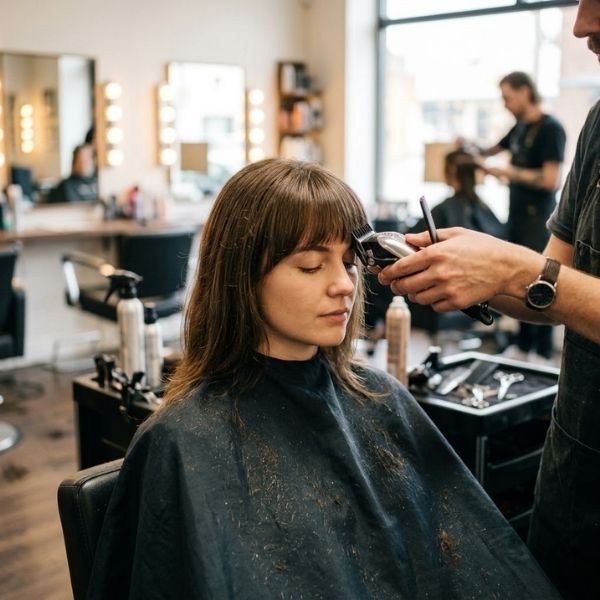
Clippers are built for blending, not for shaping a precise fringe line, and using them on bangs usually produces a blunt, uneven edge. Scissors give far more control over the shape and texture.
3. Neglecting heat protection when blow-drying hair
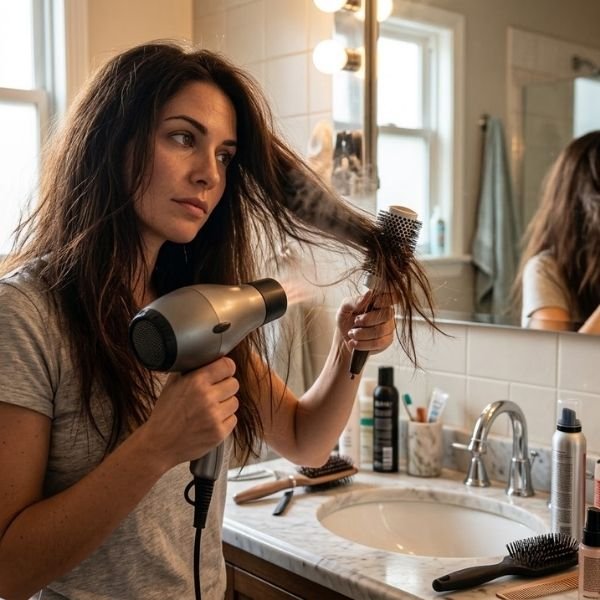
Skipping heat protectant while blow-drying the fringe daily leads to dryness and split ends over time, which makes the bangs look thin and frizzy far sooner than they should.
4. Choose a classic mid fade rather than a mid taper
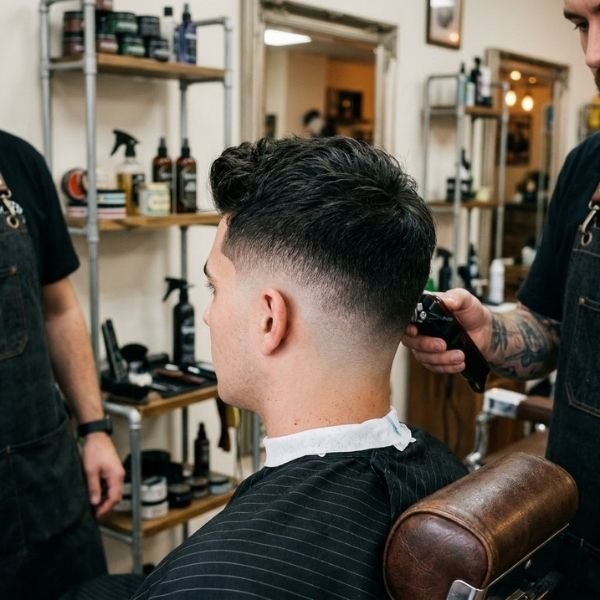
Asking for a mid fade when you actually want a softer, lower maintenance look can leave you with a harder edge than expected. Being specific about “mid taper fade” rather than just “mid fade” avoids this mix up.
5. Waiting too long between fringe trims

Bangs grow into the eyes faster than the rest of the cut, and waiting six or more weeks between trims usually means dealing with an awkward, overgrown fringe stage.
6. Using wax that is too thick on textured fringes
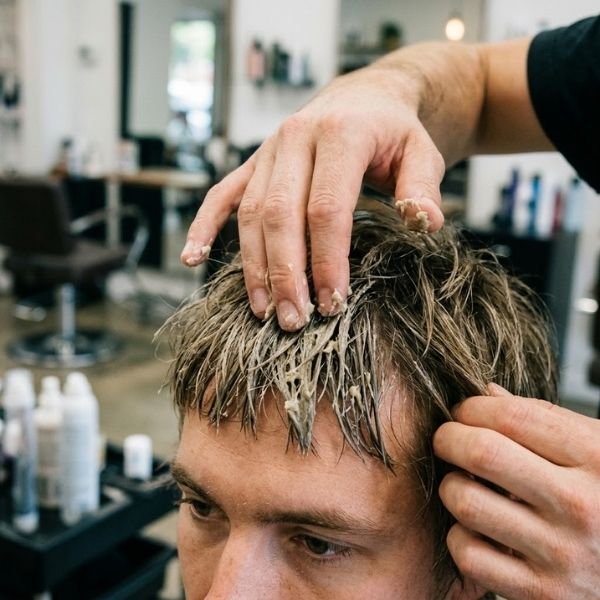
Heavy waxes can clump textured or curly fringes together, killing the natural movement that makes the style work. A lighter cream or gel usually holds better without the stiff, separated look.
How to style a mid-taper fade with bangs
Styling this cut day to day is straightforward once you have a routine, and it takes most people under five minutes once they know what products work with their hair type.
Daily Hair Styling Routine
- Start with damp, towel dried hair rather than fully wet hair
- Apply a small amount of product evenly through the fringe with your fingers
- Blow-dry the roots in the direction you want the fringe to fall, then let the ends set
- Comb or finger-style the bangs into place once mostly dry
The Best Products to Use
- Volumizing mousse for straight or fine hair that needs lift at the root
- Light styling cream for a natural, low shine finish on wavy hair
- Curl defining gel for curly or coily fringes that need definition without crunch
- Matte clay for a stronger hold on side swept or blowout styles
How often should you touch up your bangs?
Most people need a fringe trim every three to four weeks to keep the length from falling into the eyes, even if the rest of the fade can go six to eight weeks between full haircuts.
What face shape is best suited to a layered fringe?
A layered fringe can work on almost any face shape, but the length and angle should change depending on your proportions to get the most flattering result.
Oval face
Oval faces have the most flexibility and can wear nearly any fringe style, from blunt short bangs to a full curtain fringe, without needing to worry much about proportion.
Round Face
Side swept or tapered fringes work best here, since they add angles and draw the eye diagonally rather than emphasizing the width of the face.
Square Face
Curtain bangs or a softly layered fringe help soften the strong jawline that defines a square face, breaking up the straight lines along the forehead.
Long Face
A straight, blunt fringe across the forehead shortens the visual length of the face, which is why barbers often recommend it for longer face shapes over side swept options.
Heart-Shaped Face
Wispy, textured fringes work well here because they soften a wider forehead without adding extra bulk at the top, keeping the proportions balanced toward the narrower chin.
Bland
This cut is not limited to one age group or lifestyle. Because it can be dialed up or down in maintenance and boldness, it fits several different everyday needs.
Teenagers
Younger guys tend to go for the bolder versions, like the blowout fringe or wavy textured styles, since they are more willing to spend a few extra minutes styling in the morning.
Young men
For men in their twenties and thirties, the side swept or tapered fringe tends to be the most common request, since it reads as polished enough for work while still having some edge.
active men
Guys with active lifestyles usually lean toward short bangs or a tapered fringe, both of which hold up well under sweat and a helmet or cap without losing their shape.
Does a layered fringe make you look younger or older?
A layered fringe generally reads as more youthful, since it softens the forehead and adds movement to the face, which is part of why it has become so popular with younger men in the past couple of years. That said, a longer, more structured fringe on mature hair can also work in the opposite direction, framing a receding hairline in a way that looks intentional rather than accidental.
How to ask your hairdresser for a Mid Taper Fade with bangs
Barbers see dozens of clients a week, so being specific about length, guard number, and fringe style is the fastest way to avoid a result you did not ask for.
Key Phrases to Use with Your Hairdresser
- “I want a mid taper fade, starting around the temple, not a full skin fade”
- “Leave the top at least three inches for a fringe I can style forward”
- “Cut the bangs with scissors, not clippers, and point cut the ends”
- “Blend the fade into the fringe so there is no harsh line at the part”
Choosing the Right Length and the Right Clipper Guard
Most mid taper fades start with a number 2 or 3 guard at the midpoint and taper down to a 0 or skin finish at the bottom. For the top, ask for at least three to four inches if you want enough length to style a proper fringe, since anything shorter limits how much the bangs can move.
Common Mistakes to Mention to Your Barber
Tell your barber upfront if you have had issues before with a fringe cut too short, an uneven fade line, or bangs that were shaped with clippers instead of scissors. Mentioning these ahead of time saves a lot of back and forth once the cutting starts.
Frequently Asked Questions
Does a mid taper fade with bangs work on curly hair?
Yes. Curly hair actually adds natural volume to the fringe, making styles like the wavy fringe variation easier to maintain than on straight hair.
How long does it take to grow out bangs for this style?
Most men need six to eight weeks of growth before the fringe is long enough to style forward properly.
Can I do a mid taper fade with bangs at home?
The sides can be managed with clippers and guards, but the fringe should be trimmed by a professional using scissors for a clean, even edge.
Is this cut appropriate for a professional workplace?
Yes, especially the short bangs or side swept variations, both of which read as polished rather than casual.
How much does this haircut typically cost?
Pricing varies by barbershop and location, but expect to pay slightly more than a standard fade due to the extra scissor work needed for the fringe.
Conclusion
The mid taper fade with bangs earns its popularity by being genuinely adaptable. It works across hair types, face shapes, and age groups, and the six variations covered here give you a real starting point for your next barber visit.
The details matter most with this cut. Getting the fringe length right, avoiding clippers on the bangs, and being specific with your barber about where the taper should start will make the difference between a style that looks intentional and one that just looks unfinished. Bring this

8 thoughts on “Mid Taper Fade with Bangs: The Secret to Sharp Looks 2026 ”